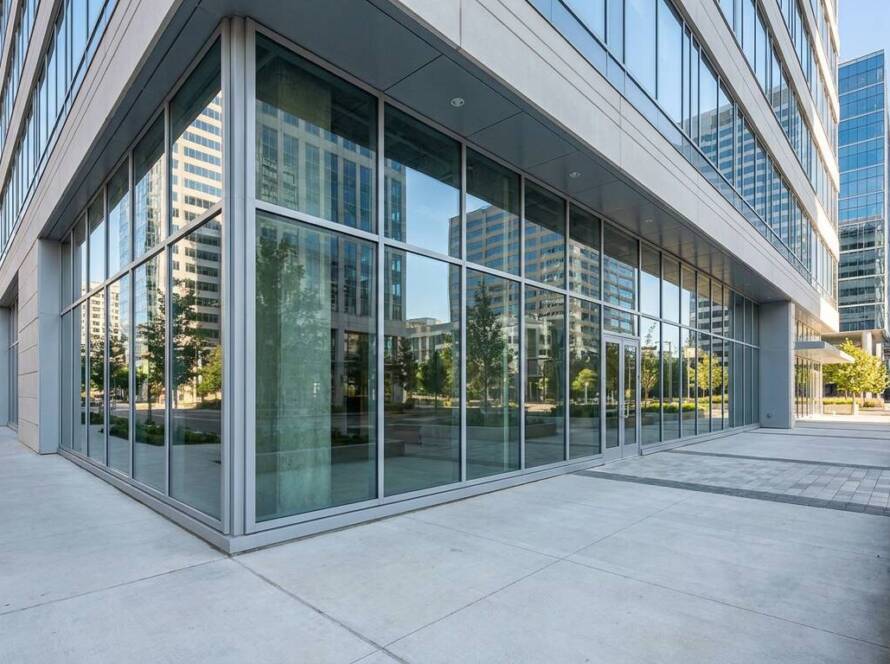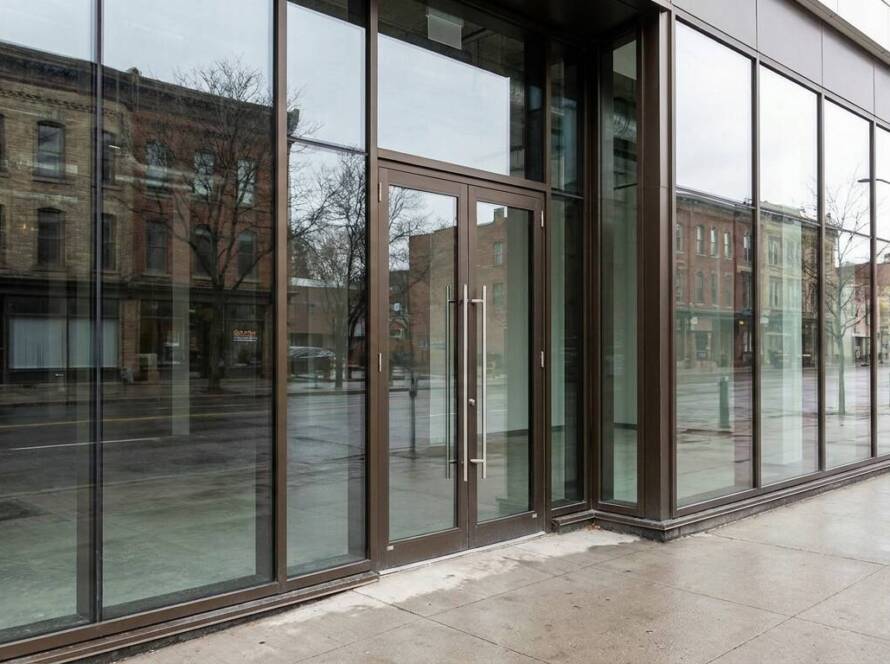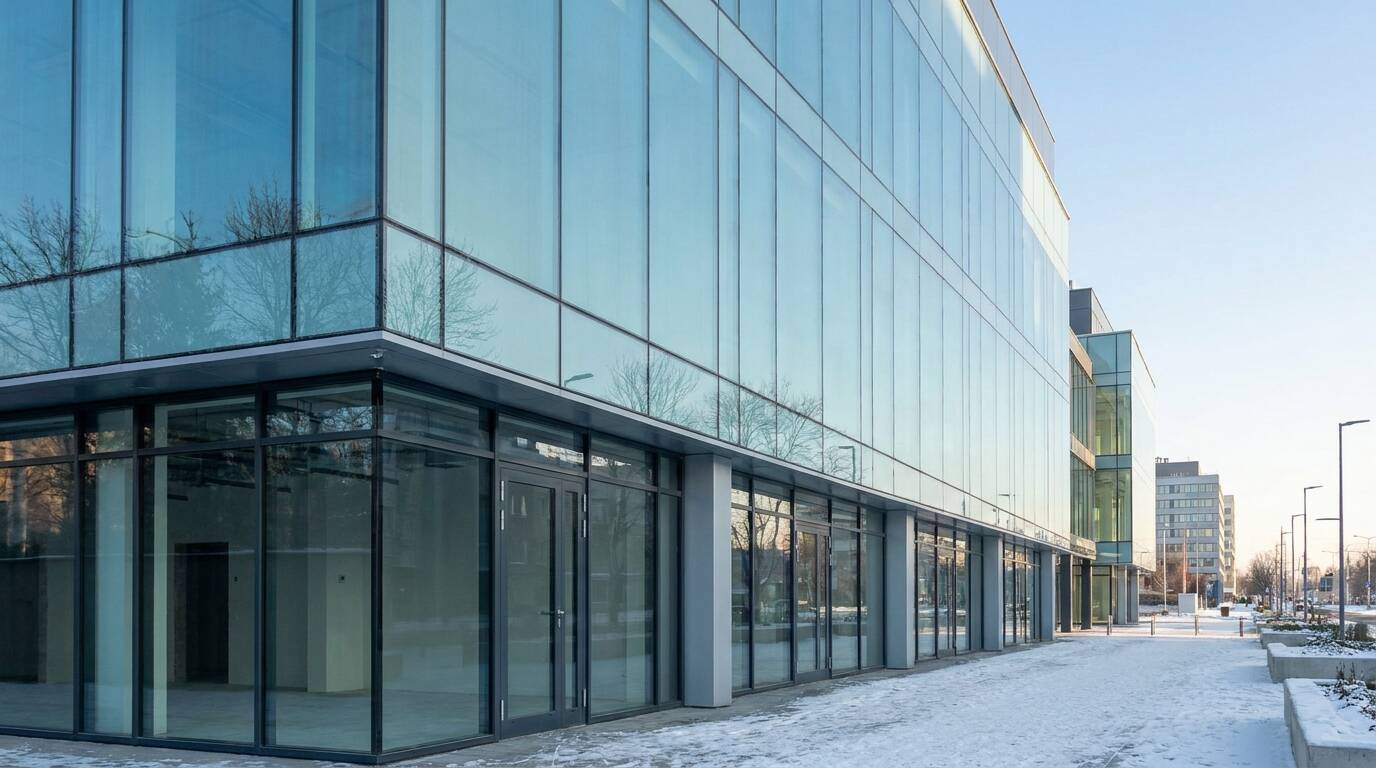
Heating a commercial building through an Ontario winter is expensive, and a surprising share of that cost walks straight out through the glass. Windows and storefront glazing are usually the weakest thermal point in the whole envelope, which is why the type of glass you specify matters as much as the frame around it. Low-E glass is the single upgrade that does the most to slow that heat loss, and most building owners in the Greater Toronto Area are already paying for it without fully understanding what they bought.
This guide explains what the low-emissivity coating actually does, how soft-coat and hard-coat versions differ, which performance numbers to read before you sign off on a quote, and how to pick the right configuration for a cold, heating-dominated climate. It is written for the people who make these decisions in commercial buildings: owners, property and facility managers, retailers, restaurants, and the contractors and architects who spec glass for them.
What is Low-E glass?
Low-E glass is ordinary float glass with a microscopically thin, transparent coating of metal or metal oxide on one surface. The coating reflects radiant heat while letting most visible light through, so the glass insulates far better than a plain pane without turning the window dark. The layer is often described as being hundreds of times thinner than a human hair, and in normal daylight you would struggle to tell it is there.
The “E” stands for emissivity, which is a measure of how readily a surface gives off radiant heat. Clear uncoated glass has a high emissivity, around 0.84, so it radiates heat freely in both directions. A low-emissivity coating pushes that figure down dramatically, which means the glass holds heat on the side you want it and reflects the rest back. In a cold climate that keeps furnace heat inside; in summer it reflects a good portion of the sun’s heat away from the building.
How the coating works
Sunlight and heat reach a window as three broad bands of energy: visible light that you can see, ultraviolet that fades fabrics and finishes, and infrared that you feel as heat. A low-E coating is tuned to treat each band differently. It passes visible light so interiors stay bright, blocks a large share of ultraviolet, and reflects infrared.
Think of the coating as a selective mirror for heat. In winter, the warmth radiating off your heating system, your lighting, and the people inside hits the glass and bounces back into the room instead of escaping. In summer, solar heat radiating off hot pavement and the sky gets reflected outward before it loads up your air conditioning. The glass stays visually clear the whole time because the coating is doing its work in parts of the spectrum your eye cannot see.
That selective behaviour is the whole point. A heavily tinted or reflective glass also cuts heat, but it does so by darkening the view and dropping daylight. A good low-E coating gives you most of the heat control with only a slight shift in colour.
Soft-coat versus hard-coat Low-E
There are two families of low-E coating, and the difference affects performance, durability, and where the glass can be used. Knowing which one is in a quote tells you a lot about what you are actually getting.
Hard-coat, also called pyrolytic, is applied while the glass is still hot on the float line. The coating fuses to the surface as the glass cools, which makes it tough and durable. It can be handled, shipped, and in many cases used as a single exposed pane. The trade-off is weaker thermal performance and a faint haze compared with the alternative.
Soft-coat, also called sputtered or MSVD after the magnetron sputter vacuum deposition process, is applied in a vacuum chamber after the glass is made. It usually contains one or more ultra-thin layers of silver, which gives much lower emissivity and much better solar control. Because those silver layers would corrode if left exposed to air and moisture, soft-coat low-E is sealed inside a double or triple pane insulated glass unit, with the coating facing the sealed air space. Nearly all high-performance commercial glazing uses soft-coat for this reason.
| Feature | Hard-coat (pyrolytic) | Soft-coat (sputtered / MSVD) |
|---|---|---|
| How it is applied | Fused on while glass is hot on the float line | Deposited in a vacuum chamber after the glass is made |
| Main coating material | Metal oxide, often tin oxide | One to three ultra-thin silver layers |
| Thermal performance | Good | Better, with lower emissivity and tighter solar control |
| Durability when exposed | Can be used as a single exposed pane | Must be sealed inside an insulated unit |
| Appearance | Slight haze possible | Very clear, faint neutral tint |
| Typical use | Budget glazing, some single-pane and specialty uses | Most commercial windows, storefronts, and curtain wall |
The performance numbers that actually matter
When a glazing quote lands on your desk, the brand name on the coating matters less than the measured numbers behind it. Four figures tell you how a given unit will perform, and they appear on the rating label that comes with certified fenestration products. The NFRC energy performance label standardizes how these are measured so you can compare products fairly.
U-factor measures how fast heat moves through the whole window. Lower is better. A plain double-pane unit loses heat far faster than the same unit with a low-E coating and an argon fill, which is why U-factor is the number to watch in a heating climate like Ontario’s.
Solar Heat Gain Coefficient, or SHGC, measures how much of the sun’s heat passes through. It runs from 0 to 1. A low SHGC keeps interiors cooler and cuts air-conditioning load, which suits a glassy south or west elevation. A higher SHGC lets in free solar warmth, which can help a shaded north face or a building that runs cold.
Visible Transmittance, or VT, is the share of daylight that gets through. Higher VT means a brighter interior and better views. The skill in specifying low-E is getting a low SHGC without crushing the VT, and modern soft-coat products do this well.
Condensation resistance rates how well the unit resists interior fogging and frost. It matters in Ontario, where a cold snap meeting humid indoor air can leave water running down poorly specified glass.
| Metric | What it measures | Which direction is better | Why it matters in the GTA |
|---|---|---|---|
| U-factor | Rate of heat loss through the window | Lower | Drives winter heating cost, the dominant load here |
| SHGC | Share of solar heat admitted | Depends on orientation | Low cuts cooling on sunny faces; higher adds free winter warmth |
| VT | Share of daylight transmitted | Higher for daylight | Keeps retail and office interiors bright and inviting |
| Condensation resistance | Resistance to interior fogging and frost | Higher | Cold winters plus indoor humidity make this real |
In Canada you will also see an Energy Rating, or ER, which rolls solar gain, heat loss, and air leakage into a single number where higher is better. It is a useful shorthand, but for a commercial project the individual U-factor and SHGC still tell the clearer story.
Single, double, and triple silver coatings
Soft-coat low-E comes in grades defined by how many layers of silver sit in the coating. More silver means tighter control over solar heat, usually with a modest cost to daylight.
Single-silver coatings let in more solar heat, so they suit colder, heating-dominated settings where free winter warmth is welcome. Double-silver coatings cut solar gain much harder while keeping good daylight, which makes them the common choice for glassy commercial elevations. Triple-silver coatings push solar control furthest and are used on heavily glazed facades with large cooling loads.
You will sometimes see product names with numbers, like a “180” or “366” designation. Those numbers usually hint at visible light transmittance or the generation of coating, but they are manufacturer labels rather than an industry standard. Read the actual U-factor and SHGC rather than the badge. The same caution applies to marketing names such as “Low-E4,” which is a brand package for a particular double-pane, argon-filled, low-E configuration and not a separate category of glass.
Picking Low-E for the Ontario climate
The GTA sits in a cold, heating-dominated climate. Winters are long and the heating season does most of the damage to an energy bill, so the first priority for most buildings here is a low U-factor to hold heat inside. Solar heat gain is the second lever, and the right SHGC depends on which way the glass faces and how the space is used.
A south or west elevation on a retail unit or office can overheat in summer and create glare, so a lower SHGC solar-control coating usually pays off. A shaded north face, or a building that struggles to stay warm, can benefit from a higher SHGC that lets in more free solar heat during the cold months. Getting this split right across different elevations is where a good glazing assessment earns its keep.
Certification helps you compare. ENERGY STAR in Canada sets performance thresholds for windows and doors that are tuned to the Canadian climate, and products that meet them carry the mark. For larger commercial buildings, the energy requirements flow through Ontario’s Building Code and its supplementary energy standards, which set limits on how much heat the building envelope, including its glazing, is allowed to lose. If your project touches the envelope, those limits may decide the minimum glass you can legally install, and they can also affect whether you need a permit for the work.
| Elevation / situation | Priority | Low-E approach that usually fits |
|---|---|---|
| South or west, lots of glass | Control summer heat and glare | Low SHGC solar-control coating, double or triple silver |
| North face, shaded | Hold heat, keep daylight | Higher SHGC single or double silver with a low U-factor |
| Retail storefront at grade | Bright, inviting view plus comfort | High VT coating with argon fill, low U-factor |
| Older single-pane building | Cut heating cost and condensation | Any low-E insulated unit is a large step up from clear single glazing |
Where Low-E fits in commercial glazing
Low-E is not a product you buy on its own. It is a coating that lives inside the glass systems a commercial building already uses, so the question is usually which of your existing assemblies should carry it.
In commercial window systems, the low-E sits on a surface inside the sealed unit, paired with an argon or sometimes krypton gas fill and a warm-edge spacer. In aluminum storefront systems and the taller curtain wall and window wall facades, the same coated insulated units glaze into the framing, and the frames themselves usually need a thermal break so the metal does not short-circuit the glass performance. Even commercial glass doors can be specified with low-E insulated units where comfort and energy matter at the entrance.
The coating also interacts with the safety glazing your building needs. Entrances, sidelites, and large panes often require tempered or laminated safety glass, and low-E coatings are available on both. For the full picture of how low-E relates to the other options, our guide to commercial glass types walks through where each one earns its place.
Which surface does the coating go on?
In a sealed double-pane unit the surfaces are numbered one to four, counting from the outside in. Surface one faces the weather, surfaces two and three face the sealed air space, and surface four faces the room. Soft-coat low-E always sits on an inner surface so the silver stays protected.
Placement is a design choice tied to climate. In a hot, cooling-dominated climate the coating often goes on surface two to reject solar heat before it enters the cavity. In a cold, heating-dominated climate it is frequently placed on surface three to keep interior heat in, and some high-performance units add a second coating on surface four for extra insulation. For a GTA building the winter priority usually drives this, and the glazing supplier sets the exact configuration based on the performance targets. The takeaway for an owner is simple: surface placement is deliberate, and a reputable installer will match it to your climate rather than treat all low-E as interchangeable.
Low-E, condensation, and glare
Low-E does more than trim an energy bill. By keeping the interior surface of the glass warmer in winter, it cuts the condensation and frost that plague clear single and older double glazing. Warmer glass means less of the fogging that damages sills, breeds mould, and annoys tenants.
On the solar side, a solar-control low-E reduces glare and the hot spots that make south-facing retail and office space uncomfortable by mid-afternoon. It also blocks most ultraviolet, which slows the fading of merchandise, signage, flooring, and furnishings. For a retailer whose stock sits in a sunny window, that fade protection is a practical benefit that shows up on the sales floor.
The trade-offs of Low-E glass
No glazing choice is free of compromise, and it is worth going in with eyes open. Low-E costs more than plain glass, though the heating and cooling savings usually recover that gap over the life of the unit. The faint tint bothers a small number of people, especially on a triple-silver solar-control product viewed at an angle. In rare cases, a strongly reflective exterior coating has been linked to concentrating reflected sunlight, which is a design consideration for large, curved, or heavily glazed facades rather than a typical storefront concern.
There is also a maintenance nuance. The high-performance soft-coat sits sealed inside the unit, so it is never exposed, but the sealed unit itself can eventually fail, and when it does the low-E benefit goes with it. That is the main real-world failure mode to watch, and it is covered below.
| Benefit | Trade-off to weigh |
|---|---|
| Lower heating and cooling cost | Higher upfront price than plain glass |
| Warmer glass, less condensation | Faint tint on higher-performance coatings |
| Strong UV and fade protection | A higher-SHGC face loses some of that control |
| Reduced glare and solar hot spots | Benefit is lost if the sealed unit fails |
Signs your Low-E unit has failed
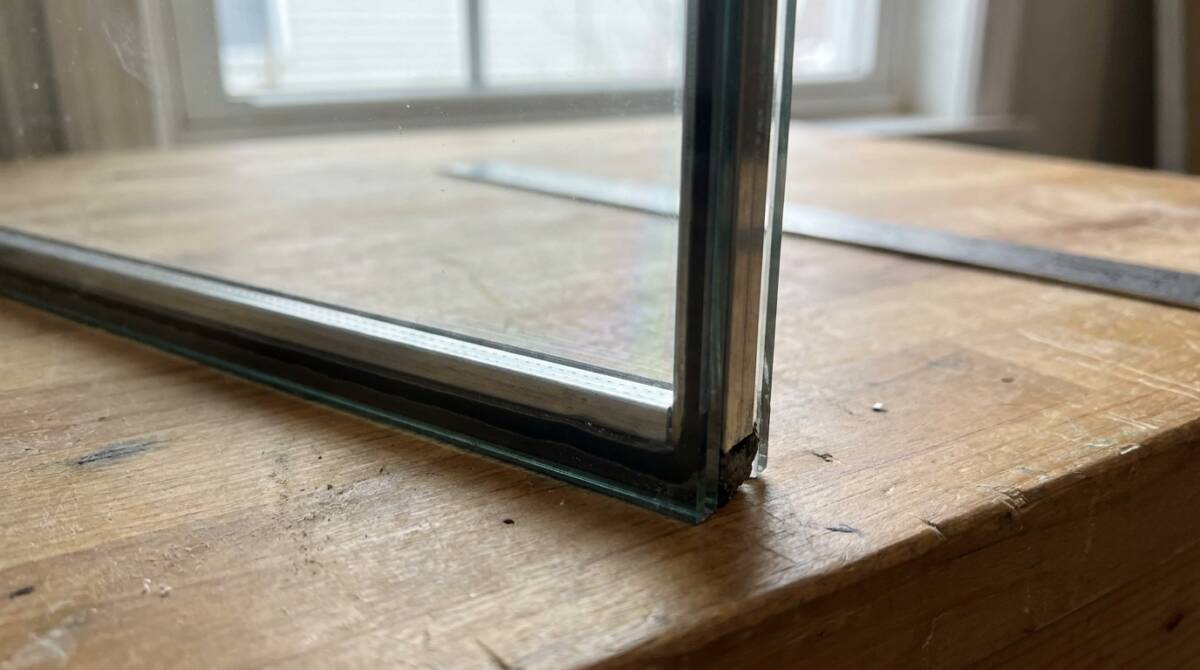
Because the coating that does the heavy lifting lives inside a sealed unit, the thing that ends its working life is almost always a seal failure, not the coating wearing out. When the perimeter seal breaks down, the gas fill escapes and moisture gets into the cavity. You see it as persistent fog, haze, or water droplets trapped between the panes that no cleaning will remove, sometimes with a visible film where the coating has started to degrade.
A fogged unit has lost most of its insulating value and all of its argon fill, so the low-E benefit is effectively gone even though the glass still looks mostly clear from a distance. Our deeper guide to insulated glass units and seal failure covers the warning signs in detail. When it happens, the usual fix is to replace the sealed unit with a new low-E insulated one rather than the whole frame, which is often the better path and is the kind of call our guide to repair versus replacement is built to help with. In many storefront and window systems it is possible to replace just the affected pane instead of the full run.
| What you notice | Likely cause | Usual action |
|---|---|---|
| Permanent fog or haze between panes | Seal failure, lost gas fill, moisture ingress | Replace the sealed unit with a new low-E unit |
| Water droplets trapped inside the glass | Failed perimeter seal | Replace the unit; the coating benefit is gone |
| Cold interior glass, winter condensation | Degraded unit or non low-E glazing | Assess, then upgrade to a low-E insulated unit |
| Cracked or broken pane | Impact or stress | Emergency glass repair, then replace with matching low-E |
A broken low-E pane on a storefront is also a security and weather problem, not only an energy one, so a cracked or shattered unit is worth treating as urgent. We handle emergency commercial glass repair across the GTA for exactly these situations.
Cleaning and maintaining Low-E glass
Day to day, low-E glass is cleaned like any other glass, because the high-performance coating is sealed inside the unit where you can never touch it. What you are cleaning is a normal exterior glass surface. The safe routine is a soft cloth or squeegee, plain water with a little mild dish soap, and no abrasive pads or scrapers that could scratch the glass.
The common question is whether ammonia-based cleaners such as a typical blue window spray are a problem. On the exposed outer glass of a sealed low-E unit they are generally fine for occasional use, but a gentle soap-and-water or diluted vinegar solution is the safer habit, especially on any hard-coat low-E surface that is exposed. Avoid cleaning in direct hot sun, which dries the cleaner into streaks, and never use razor blades or metal scrapers. The same gentle approach we recommend for cleaning and maintaining aluminum storefront glass applies to low-E units as well. Keeping the frames, gaskets, and weatherstripping in good shape protects the seal that keeps the coating working.
What drives the cost of Low-E commercial glazing
There is no single price for low-E, because the coating is only one line in a larger glazing cost. The honest answer to “what will this cost” is that it depends on the factors below, which is why an on-site assessment beats a phone estimate for anything larger than a single pane.
| Cost driver | How it moves the price |
|---|---|
| Coating grade | Triple-silver solar-control glass costs more than single-silver |
| Unit build | Argon or krypton fill, warm-edge spacers, and triple glazing add cost |
| Safety glazing | Tempered or laminated panes raise the per-unit price |
| Size and access | Large panes and high or awkward openings need more labour and equipment |
| Frame and thermal break | A thermally broken frame protects the glass performance and adds cost |
| Scope | One failed unit is cheaper than reglazing a full storefront run |
If you are weighing a larger upgrade, our overview of what to expect from a replacement timeline sets realistic expectations on lead times and downtime.
Frequently asked questions
What is Low-E glass in simple terms?
It is window glass with an invisible metallic coating that reflects heat while letting light through. In winter it keeps your heat inside; in summer it reflects the sun’s heat away. The glass looks almost identical to plain glass but insulates far better.
Does Low-E glass really save money?
In a heating-dominated climate like the GTA, yes. A low-E insulated unit loses far less heat than clear single or double glazing, which trims the winter heating load that dominates most commercial energy bills, and it cuts summer cooling on sunny elevations.
What is the difference between soft-coat and hard-coat Low-E?
Soft-coat is applied in a vacuum, uses silver layers, performs better, and must be sealed inside an insulated unit. Hard-coat is fused onto hot glass, is more durable, can be used exposed, and performs a bit less well. Most commercial glazing uses soft-coat.
Is Low-E or tempered glass better?
They are not competing choices. Low-E is a coating for energy performance; tempered is a treatment for safety and strength. A single pane can be both low-E and tempered, and many commercial entrances need exactly that combination.
Which surface does the Low-E coating go on?
Always an inner surface of a sealed unit, counted one to four from outside in. In cold climates it is often on surface three to keep heat in; in hot climates on surface two to reject solar heat. The glazing supplier sets the exact placement for your targets.
What are the downsides of Low-E glass?
It costs more than plain glass, carries a faint tint on higher-performance coatings, and loses its benefit if the sealed unit fails. For most GTA buildings the energy savings outweigh these, but they are worth knowing before you buy.
What is Low-E4 glass?
“Low-E4” is a manufacturer brand name for a specific double-pane, argon-filled, low-E package, not a separate class of glass. Judge it by its actual U-factor and SHGC rather than the badge, the same way you would any other product.
How much do Low-E glass units cost?
There is no flat rate. Price depends on coating grade, gas fill, safety glazing, pane size, access, and whether you are replacing one failed unit or reglazing a whole storefront. An on-site assessment gives a real number where a phone quote cannot.
Can I use Windex on Low-E glass?
On the exposed outer glass of a sealed low-E unit, occasional use of a standard ammonia-based spray is generally fine, since the coating is inside the unit. A mild soap-and-water or diluted vinegar solution is the safer everyday habit, with a soft cloth and no scrapers.
What is the best cleaner for Low-E glass?
Plain water with a little mild dish soap, or a diluted vinegar solution, applied with a soft cloth or squeegee. Avoid abrasive pads, razor blades, and cleaning in direct hot sun. Gentle and routine beats harsh and occasional.
Does Low-E glass look different from regular glass?
Only slightly. Most low-E carries a faint neutral tint that is easy to miss head-on and a little more visible at a sharp angle. High-solar-control coatings show the most colour; high-daylight coatings show the least.
Does Low-E glass block UV?
It blocks a large share of ultraviolet, which slows the fading of merchandise, flooring, signage, and furnishings. It does not block all UV, but the reduction is enough to matter for a retailer with stock in a sunny window.
Is Low-E glass worth it for an older building?
Usually, yes. Moving from clear single glazing to any low-E insulated unit is a large jump in comfort and heating cost, and it cuts the winter condensation that damages sills and frames. The upgrade often pays back through lower bills and fewer moisture problems.
Can a foggy Low-E window be repaired without replacing it?
Fog between the panes means the seal has failed and the gas fill is gone, and that cannot be reliably restored. The dependable fix is to replace the sealed unit with a new low-E one, which is cheaper than replacing the whole frame.
Do I need Low-E glass to meet building code in Ontario?
For many commercial projects that touch the building envelope, the energy requirements in Ontario’s Building Code effectively require glazing that performs at low-E levels. The exact limits depend on the building and the scope of work, so confirm with your glazing provider and the local authority.
Can you replace just one Low-E pane in a storefront?
Often, yes. Many aluminum storefront and window systems let you swap a single failed or broken insulated unit without redoing the whole run, which saves cost and downtime. The right call depends on the system and the condition of the surrounding glazing.
Talk to a commercial glazing team about Low-E
If your glass is fogging, your winter heating bill keeps climbing, or you are planning a storefront or window refresh, the practical next step is an assessment of what you have and what the right low-E configuration would be for each elevation. Commercial Door Pros handles commercial glass replacement, commercial window installation and window replacement, and aluminum storefront replacement for businesses across the Greater Toronto Area, with low-E insulated units matched to the Ontario climate. Contact us for a free estimate and we will help you pick glass that pays you back through the winters ahead.