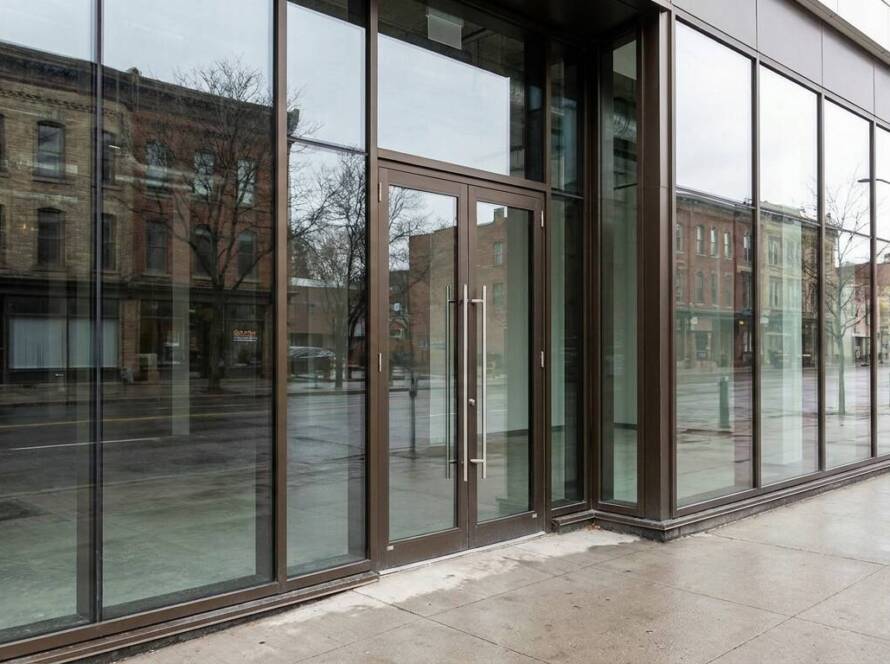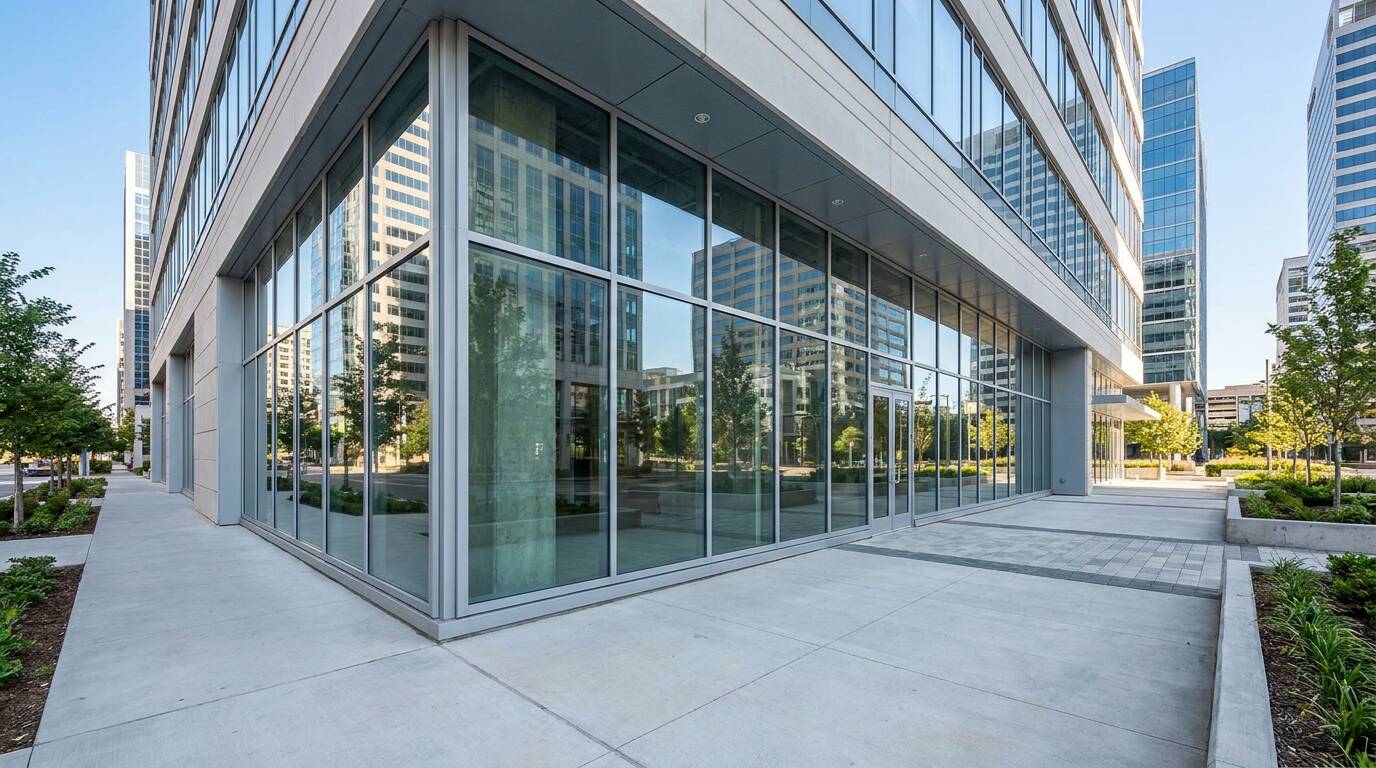
Walk past any plaza, office tower, or medical building in the Greater Toronto Area and the first thing you notice is the glass. Commercial windows shape how a business looks from the street, how comfortable it feels inside, and how much you spend heating and cooling the space every month. They also work hard in ways most people never think about until something goes wrong: a sealed unit fogs up, a frame starts leaking, or a cracked pane turns into a security problem overnight.
This guide walks through commercial windows the way a glazing and storefront specialist would explain them to a property manager or business owner who has to make a decision. We cover the common window types, the frame materials, what the glass and the energy ratings actually mean, how to tell repair from replacement, what drives cost, and the code and accessibility rules that apply to commercial buildings in Ontario. The goal is to help you ask better questions and spend your budget where it counts.
What is a commercial window?
A commercial window is a glazed opening engineered for a non-residential building such as a store, office, warehouse, clinic, restaurant, school, or multi-unit property. Compared with house windows, commercial units use heavier frames (usually aluminum), larger glass sizes, and are tested to performance standards for structural load, air and water tightness, and energy use in a building that sees far more traffic and wear.
One quick note on scope. This guide is about building and storefront glazing: the fixed and operable windows set into walls and curtain-wall or storefront framing. It is not about food-truck or concession serving windows, and it is not about window coverings like blinds or roller shades. If you searched “commercial windows” looking for the glass-and-frame systems in a commercial property, you are in the right place.
Commercial windows vs residential windows
The two look similar from a distance, but they are built for different jobs. Residential windows prioritize warmth, quiet, and a tidy look at a modest price. Commercial windows prioritize durability, large spans, consistent performance across a whole building, and compliance with the codes that govern public and workplace spaces. Here is how the differences usually shake out.
| Factor | Residential windows | Commercial windows |
|---|---|---|
| Frame material | Mostly vinyl, some wood or fiberglass | Mostly aluminum, often thermally broken |
| Glass size | Smaller panes | Large spans and full-height glazing |
| Testing | Residential performance class | Commercial and higher performance classes under NAFS |
| Code focus | Egress, energy | Safety glazing, barrier-free access, fire separations |
| Service life expectation | Comfort and curb appeal | Heavy daily use, minimal downtime |
If you are weighing a frame choice for a specific project, our overview of whether steel or aluminum is the better fit for a commercial opening covers the same material trade-offs that apply to window frames.
Types of commercial windows
Commercial windows fall into two broad groups: fixed units that do not open, and operable units that do. Most commercial buildings use a mix. Fixed glazing gives you the biggest, clearest views and the tightest seal, while operable windows provide ventilation where occupants want fresh air or where code calls for it.
Fixed and picture windows
A fixed window is a sealed pane in a frame with no moving parts. Because nothing opens, it offers the best air and water tightness and the lowest long-term maintenance. Fixed units dominate offices, lobbies, and storefronts where the view and daylight matter more than ventilation.
Casement and awning windows
Casement windows are hinged at the side and crank outward like a door. Awning windows are hinged at the top and open outward from the bottom, which lets them shed rain while staying open. Both seal well when closed because the sash presses against the frame, and both are common in offices and institutional buildings that need controlled ventilation.
Hopper and horizontal slider windows
Hopper windows hinge at the bottom and tilt inward, so they show up in basements, mechanical rooms, and washrooms. Horizontal sliders move side to side on a track and are a budget-friendly choice for break rooms, back offices, and low-rise commercial spaces.
Single-hung, double-hung, and tilt-turn windows
Hung windows slide vertically: a single-hung has one moving sash, a double-hung has two. Tilt-turn windows are a European-style unit that can tilt in at the top for a vent or swing fully open for cleaning and egress, and they are popular in higher-end offices and mixed-use buildings.
Storefront, window wall, and curtain wall systems
This is where commercial glazing gets its own vocabulary, and the three terms are not interchangeable. A storefront system is a non-load-bearing aluminum-framed glazing assembly, usually at ground level and up to roughly three metres tall, built for entrances and retail frontage. A window wall sits between floor slabs, resting on the slab below and tucking under the slab above. A curtain wall hangs off the face of the building structure and can run continuously across several floors. Our deep dive into aluminum storefront systems breaks down the framing, glazing, and door options for the ground-floor version, and the companion guide to commercial glass doors covers the entrances that usually sit inside that frame.
| Window type | Opens? | Best for | Trade-off |
|---|---|---|---|
| Fixed / picture | No | Views, daylight, tight seal | No ventilation |
| Casement | Yes (side hinge) | Controlled airflow, good seal | Projects outward |
| Awning | Yes (top hinge) | Ventilation in rain | Limited opening size |
| Hopper | Yes (bottom hinge) | Basements, washrooms | Small, inward swing |
| Horizontal slider | Yes (slides) | Budget, back-of-house | Only half opens |
| Single / double hung | Yes (vertical) | Traditional look | More seals to maintain |
| Tilt-turn | Yes (dual action) | Vent plus full egress and cleaning | Higher cost |
| Storefront / curtain wall | Usually fixed | Large frontage and facades | Engineered system, specialized install |
Frame materials and why they matter
The frame does more than hold glass. It controls how much heat the window conducts, how long the unit lasts, and how much upkeep it needs. In commercial work, aluminum leads for good reasons, but each material has a place.
Aluminum (and thermally broken aluminum)
Aluminum is strong, light, and holds large glass with slim sightlines, which is why it dominates storefronts, curtain walls, and office glazing. Plain aluminum conducts heat readily, so quality commercial units use a thermal break: an insulating polymer barrier set between the inside and outside of the frame to slow heat transfer and cut condensation. If you are specifying aluminum windows in the GTA, a thermal break is worth the premium in our climate.
Vinyl, fiberglass, and wood-clad
Vinyl frames insulate well and cost less, and they suit low-rise offices, clinics, and multi-residential buildings where spans are modest. Fiberglass is stronger and more stable across temperature swings, bridging the gap between vinyl and aluminum. Wood-clad units pair a warm wood interior with a protective aluminum or vinyl exterior, and they turn up in heritage and design-forward projects where appearance drives the choice.
| Frame | Strength / span | Insulation | Typical commercial use |
|---|---|---|---|
| Aluminum (thermally broken) | Excellent, large spans | Good with thermal break | Storefronts, curtain wall, offices |
| Vinyl | Modest | Very good | Low-rise offices, clinics, residential-style units |
| Fiberglass | Strong, stable | Very good | Mid-range projects wanting durability |
| Wood-clad | Moderate | Good | Heritage, design-led interiors |
The glass: glazing, coatings, and gas fills
The glass package is where most of a window’s energy performance lives. Nearly all commercial windows today use an insulated glazing unit, or IGU: two or more panes separated by a spacer and sealed around the edge, with the gap filled by dry air or an inert gas. The sealed cavity is what slows heat moving through the window.
What is commercial window glazing?
Glazing refers to the glass in a window and how it is assembled into the frame. Single glazing is one pane. Double glazing uses two panes with a sealed air or gas space between them, and triple glazing adds a third pane for colder climates or quieter interiors. In the GTA, double glazing is the commercial baseline, with triple glazing chosen for energy targets or noise control.
Low-E coatings, argon, and warm-edge spacers
A low-emissivity (Low-E) coating is a microscopically thin metallic layer on the glass that reflects heat while letting light through. It keeps warmth inside during Ontario winters and blocks solar heat in summer. Filling the sealed cavity with argon, a harmless inert gas denser than air, further reduces heat flow. A warm-edge spacer at the glass perimeter replaces older aluminum spacers that conducted heat and invited condensation along the edges. Together these three upgrades do most of the heavy lifting on a modern window’s energy numbers. Our guide to commercial glass types goes deeper on tempered, laminated, insulated, and Low-E glass if you want the full picture.
Safety glazing: tempered and laminated glass
Some window locations in a commercial building are considered hazardous, meaning there is a real risk a person could walk into the glass or fall against it. Glazing in and next to doors, large low panes, and glass near walking surfaces generally has to be safety glass. Tempered glass is heat-treated so it is much stronger and breaks into small blunt pieces instead of sharp shards. Laminated glass holds together on a plastic interlayer when broken, which also makes it harder to force entry. In Canada, safety glazing is produced and labelled to the CAN/CGSB-12.1 standard, and the Ontario Building Code regulation sets out where it is required.
Energy ratings and performance standards
Commercial window labels carry a few numbers that tell you how the unit performs. Learning three of them makes any product comparison much easier.
| Rating | What it measures | Which direction is better |
|---|---|---|
| U-factor | How much heat the whole window lets through | Lower is better insulation |
| Solar Heat Gain Coefficient (SHGC) | How much solar heat passes through the glass | Lower keeps summer heat out; higher captures winter sun |
| Visible Transmittance (VT) | How much daylight the glass lets in | Higher means brighter interiors |
| Air leakage | How much air sneaks through the assembly | Lower is tighter |
In Canada, commercial windows are tested and rated under the North American Fenestration Standard (NAFS), which the Ontario Building Code references, together with the CSA A440 series that adapts it to Canadian conditions. For energy specifically, ENERGY STAR certification is the familiar shorthand, administered here by Natural Resources Canada. You can confirm how a product is certified and which climate zone it suits through the federal program for ENERGY STAR windows, doors, and skylights. Matching the window’s ratings to your building’s orientation and use is where a knowledgeable installer earns their keep: south-facing glass, a cold north wall, and a west elevation baking in afternoon sun each call for different choices.
Why energy efficiency pays off for GTA businesses
Windows are often the weakest thermal link in a commercial envelope. Old single-glazed units, failed seals, and frames with no thermal break leak heat in January and let solar gain overload the cooling system in July. For a business paying the bills, that shows up as higher energy costs and uneven comfort that staff and customers notice. Upgrading to a tight, well-rated glazing package trims heating and cooling load, steadies indoor temperatures, and cuts the condensation and drafts that make a space feel older than it is. The payback depends on your current windows, your hours, and your energy rates, but the comfort improvement is immediate.
Code, accessibility, and safety considerations
Commercial glazing has to answer to more rules than a house window. The big ones in Ontario are safety glazing in hazardous locations, which we covered above, plus barrier-free design and, where windows sit in a fire separation, fire-rated glazing. Operable windows above ground level may also need opening limiters or guards to prevent falls. If your project touches an entrance or a fire-rated assembly, the requirements tighten quickly, and our overview of whether existing openings meet the Ontario Building Code is a useful companion read. Permitting is the other piece: changing the size of an opening, altering the structure, or doing substantial storefront work usually needs a permit, which we explain in our guide to when GTA businesses need permits for doors, windows, or storefront work.
Security and commercial windows
Glass is a common entry point for break-ins, so security is a fair concern for retail, cannabis, pharmacy, and after-hours businesses. Laminated glass is the workhorse here because the interlayer keeps the pane together even after it cracks, slowing a forced entry and buying time. Security film applied to existing glass offers a lighter upgrade. Where a property needs more, physical measures and better locking hardware come into play, and we cover the broader approach in our rundown of commercial property security upgrades across the GTA. A window specialist can tell you which approach fits your risk and your budget without overbuilding.

Common commercial window problems and what causes them
Most window service calls trace back to a handful of issues. Spotting the symptom early usually means a smaller repair.
| Symptom | Likely cause | Usual fix |
|---|---|---|
| Fog or haze between the panes | Failed IGU edge seal | Replace the sealed glass unit |
| Drafts near the sash | Worn weatherstripping or seals | Reseal or replace gaskets |
| Water on the sill after rain | Failed perimeter caulking or blocked weep holes | Re-seal, clear weeps, check flashing |
| Condensation on the inside glass | High indoor humidity or poor glazing | Address humidity, upgrade glazing |
| Stiff or stuck operable sash | Worn hardware, dirt in the track | Service or replace hardware |
| Cracked or broken pane | Impact, stress, or vandalism | Glass replacement, often same-day for safety |
A foggy sealed unit is the one people most often misunderstand. The frame and sash can be perfectly fine while only the glass package has failed, so in many cases you replace the sealed unit and keep the window. Broken glass is the opposite situation: a shattered pane on a storefront is a safety and security issue that usually calls for emergency commercial glass repair to board up and re-glaze fast. For failed units and cracked panes alike, commercial glass replacement often restores the window without a full tear-out.
Repair or replace: how to decide
The honest answer is that it depends on what has failed. A good rule of thumb: if the frame is sound and the problem is glass, hardware, or seals, repair is usually the smart money. If the frame itself is corroded, racked, or chronically leaking, or if the whole building is due for an energy upgrade, replacement makes more sense. This table captures the usual logic.
| Situation | Lean toward repair | Lean toward replacement |
|---|---|---|
| Foggy sealed unit, frame sound | Yes, replace the glass only | No |
| Single broken pane | Yes, re-glaze | Only if frame is also damaged |
| Worn hardware or seals | Yes, service parts | No |
| Corroded or warped frame | No | Yes |
| Chronic leaks across many units | No | Yes, consider a system replacement |
| Energy or appearance upgrade planned | Maybe, as a stopgap | Yes |
We walk through this decision in more detail, for both openings, in our guide on repair versus replacement for commercial doors and windows. When a repair is the right call, our commercial window services cover glass, seals, and hardware; when replacement wins, commercial window replacement handles the full swap.
Installation and project timeline
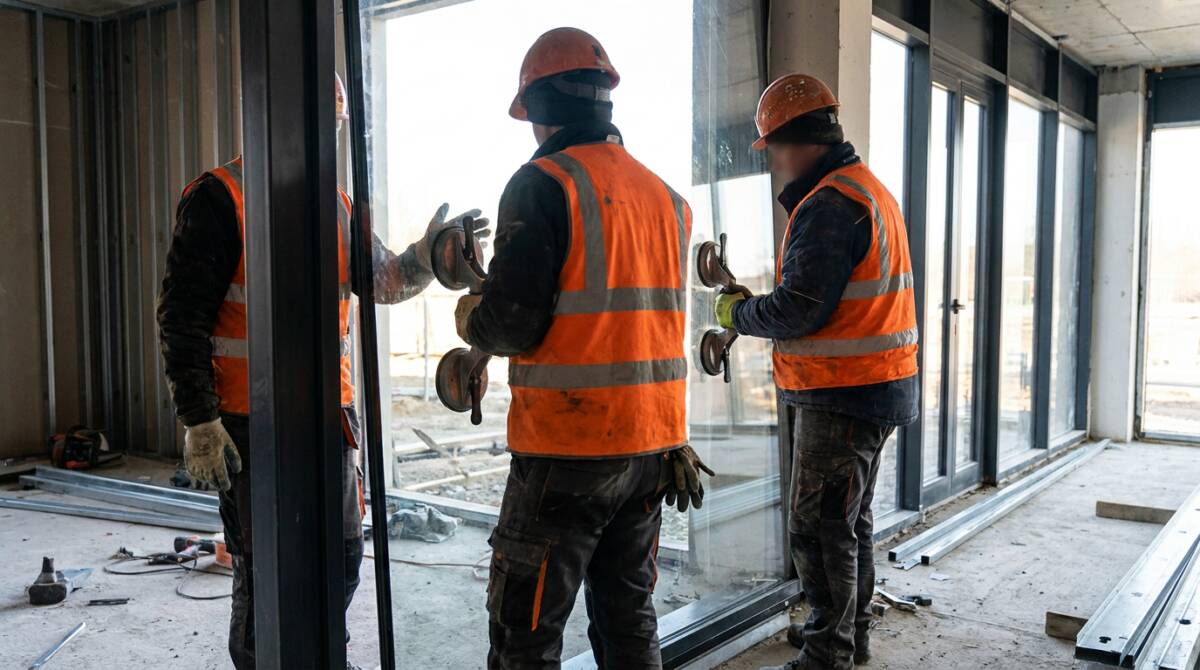
Commercial window installation is more involved than swapping a house window. The crew has to manage access on an occupied building, protect the interior, handle large and heavy glass safely, flash and seal the opening correctly, and in many cases coordinate around business hours so the space keeps running. A clean install is what determines whether the window actually performs the way its ratings promise, because even a great unit leaks if it is poorly sealed and flashed.
Timelines vary with the number of openings, the frame system, glass lead times, and whether a permit is involved. A few sealed-unit swaps can be a day; a full storefront or curtain-wall replacement is a staged project. We lay out what to expect in our commercial door and window replacement timeline, and professional commercial window installation is where the details that affect performance get handled.
What drives the cost of commercial windows
There is no single price for commercial windows because the variables are wide. Rather than quote a number that will not fit your building, it helps to understand what moves the total up or down so you can read a quote with confidence.
| Cost driver | Effect on price |
|---|---|
| Frame material and system | Thermally broken aluminum and curtain wall cost more than basic units |
| Glazing package | Triple glazing, Low-E, laminated, and gas fills add cost |
| Size and quantity | Larger spans and more openings raise material and labour |
| Access and height | Upper floors, lifts, and swing stages increase labour |
| Code and permits | Safety glazing, fire rating, and permitting add scope |
| Timing | After-hours or rushed work to avoid downtime costs more |
Because frame, glass, size, access, and code all stack together, the only reliable number is a quote based on a site visit. Costs also shift with the season and demand, which is part of why many buildings plan window work for the shoulder months rather than peak summer or deep winter.
Maintenance that keeps commercial windows performing
Windows reward a little routine attention. A simple maintenance rhythm catches small problems before they become glass or frame replacements.
| Interval | Task |
|---|---|
| Quarterly | Clean glass and tracks, check operable hardware, clear weep holes |
| Twice a year | Inspect weatherstripping and perimeter caulking, look for seal fog |
| Annually | Full walkthrough for frame corrosion, leaks, and glass condition |
| As needed | Re-caulk, replace gaskets, service or swap failing hardware |
Weatherstripping and caulking are the parts that quietly wear out and let in drafts and water, so they are worth checking first when a window starts to feel leaky. Our guide to weather stripping replacement applies to window seals as much as doors.
Choosing the right commercial windows
Pulling it together, a sound specification comes down to a few decisions made in order. Start with function: how many openings need to operate, and which can be fixed. Pick the frame material and system to match the building and the spans. Choose a glazing package whose U-factor and SHGC suit each elevation. Confirm where safety and fire-rated glass are required. Then plan the install around your hours and any permit timeline. Getting those five in the right order is most of the job, and a specialist who installs commercial glazing every day will catch the details a general contractor might miss. If you are starting from a blank slate on a new build or renovation, the same logic we use to choose the right opening for a project applies to windows too.
Talk to a GTA commercial window specialist
Whether you are dealing with a foggy sealed unit, a cracked storefront pane, chronic drafts, or a full replacement across a building, the right fix starts with someone looking at the actual opening. Commercial Door Pros works with business owners, property managers, and facility teams across Toronto and the Greater Toronto Area on commercial window and glass work. You can reach out for a free assessment or quote, book commercial window installation in Toronto, or arrange commercial window repair in Mississauga and the surrounding GTA. For glass emergencies, same-day service keeps a broken opening from turning into a security problem.
Frequently asked questions about commercial windows
What is a commercial window?
A commercial window is a glazed opening built for a non-residential building such as a store, office, clinic, or warehouse. It uses heavier framing (usually aluminum), larger glass, and is tested to commercial performance standards for structural load, air and water tightness, and energy use.
What is commercial window glazing?
Glazing is the glass in a window and how it is assembled into the frame. Commercial glazing is typically an insulated unit of two or three sealed panes, often with a Low-E coating and argon fill, set into an aluminum or vinyl frame for insulation, safety, and durability.
What is the difference between commercial and residential windows?
Commercial windows use stronger frames (mostly aluminum), span larger openings, and meet higher performance and code requirements for public and workplace buildings. Residential windows favour vinyl or wood frames, smaller panes, and comfort at a lower price for homes.
What are the main types of commercial windows?
The common types are fixed or picture windows, casement, awning, hopper, horizontal slider, single and double hung, and tilt-turn units, plus large storefront, window wall, and curtain wall systems. Most buildings mix fixed glazing with a few operable windows for ventilation.
What is the difference between storefront, window wall, and curtain wall?
A storefront is a non-load-bearing aluminum glazing system at ground level, usually up to about three metres tall. A window wall sits between floor slabs. A curtain wall hangs off the building structure and can run continuously across multiple floors.
What frame material is best for commercial windows?
Aluminum is the most common choice because it is strong, holds large glass, and gives slim sightlines. For energy performance in Ontario, choose thermally broken aluminum. Vinyl and fiberglass suit lower-rise or budget projects, and wood-clad fits design-led interiors.
What is a thermally broken aluminum window?
It is an aluminum window with an insulating polymer barrier set between the inside and outside of the frame. Because aluminum conducts heat easily, this thermal break slows heat transfer and reduces condensation, which matters in the GTA’s cold winters and warm summers.
What do U-factor and SHGC mean on a window label?
U-factor measures how much heat the whole window lets through, so a lower number means better insulation. SHGC, the solar heat gain coefficient, measures how much solar heat passes through the glass. A lower SHGC keeps summer heat out, while a higher one captures useful winter sun.
Are commercial windows double or triple glazed?
Double glazing is the commercial baseline in the GTA. Triple glazing, which adds a third pane, is chosen when a project targets stronger energy performance or needs extra noise control, for example near busy roads or transit.
Why do commercial windows fog up between the panes?
Fog or haze sealed inside the glass means the insulated unit’s edge seal has failed and moisture has entered the cavity. The frame is often still fine, so the usual fix is replacing the sealed glass unit rather than the whole window.
Can a foggy or failed sealed unit be repaired without replacing the whole window?
Yes, in most cases. When the frame and sash are sound and only the insulated glass has failed, a glazier can replace the sealed unit and leave the window in place, which costs less than a full replacement.
When should I repair a commercial window instead of replacing it?
Repair when the frame is sound and the problem is glass, hardware, or seals. Replace when the frame is corroded, warped, or chronically leaking, or when you are upgrading a whole building for energy or appearance. A site assessment settles borderline cases.
Do commercial windows need safety glass?
In hazardous locations, yes. Glazing in and beside doors, large low panes, and glass near walking surfaces generally must be tempered or laminated safety glass produced to the CAN/CGSB-12.1 standard, as required by the Ontario Building Code.
Do I need a permit to replace commercial windows in the GTA?
Like-for-like glass or sealed-unit replacement often does not, but changing an opening’s size, altering structure, or doing substantial storefront work usually does. Requirements vary by municipality, so confirm with your local building department before work begins.
How long does a commercial window replacement take?
A few sealed-unit swaps can be done in a day, while a full storefront or multi-floor replacement is a staged project running days to weeks. The number of openings, the frame system, glass lead times, and permits all affect the schedule.
What is the cheapest time of year to replace commercial windows?
The shoulder seasons of spring and fall tend to offer better scheduling and pricing than peak summer or deep winter. Planning ahead also avoids rush and after-hours premiums, and it lets you lock in glass lead times before demand climbs.
Buildings more than a few storeys tall usually glaze with a window wall or curtain wall system rather than individual windows. Our guide to curtain wall vs window wall explains how those facade systems differ and where each one fits.
To understand the coating that makes an energy-efficient window perform, read our guide to low-E glass.
For a closer look at the sealed glass inside a window and why it fogs up, read our guide to commercial insulated glass units.
For the glass itself, our comparison of tempered vs laminated glass covers strength, security, sound, and cost.