


Most commercial doors do not fail at the lock or the closer first. They fail at the hinges. A pair of entrance doors in a busy GTA retail plaza can swing open and shut a few thousand times a week, and all of that load lands on three or four small butt hinges and the handful of screws holding them to the frame. Over a year or two the screws start to pull, the top hinge takes more than its share, the door drops a few millimetres, and now it drags on the threshold, binds against the frame, and stops latching. A continuous hinge is the fix that quietly solves most of that problem before it starts.
This guide walks through what a continuous hinge is, the two main commercial types, how to choose a mounting style and material, how they are sized, when it makes sense to switch a sagging door over from butt hinges, and where fire ratings, accessibility, and electrified access control fit in. It is written for business owners, property managers, and facility teams looking after commercial doors across Toronto and the Greater Toronto Area.
What is a continuous hinge?
A continuous hinge is a single hinge that runs the full height of the door, joining the door to the frame along the entire hinge edge instead of at three or four separate points. Because the load is spread evenly down the whole length, the stress that normally concentrates on individual butt hinges and their screws is distributed, which is why continuous hinges last so long on high-traffic doors.
You will also hear them called piano hinges, since the long, knuckled hinge on a piano lid is the same basic idea. In the commercial door trade the term usually points to one of two heavier designs, covered below, rather than the thin craft-grade piano hinge sold in hardware aisles. Commercial continuous hinges are a core part of the commercial door hardware that keeps an opening aligned and secure.
Continuous hinge vs piano hinge vs butt hinges
The three terms get mixed up constantly, so here is the plain version. All continuous hinges are piano hinges in the general sense, but not every piano hinge is a commercial continuous hinge. Butt hinges are the separate, individual hinges most doors ship with. The table below sets them side by side.
| Feature | Butt hinges | Light piano hinge | Commercial continuous hinge |
|---|---|---|---|
| Length | 3 to 4 short hinges per door | Full length, thin | Full height of the door |
| Load path | Concentrated at each hinge | Spread, but lightweight | Spread along the whole edge |
| Typical use | Standard interior and light exterior doors | Cabinets, lids, light enclosures | High-traffic entrances, heavy and abused doors |
| Common failure | Screws pull, door sags, hinges wear unevenly | Bends or deforms under weight | Rarely the failure point when sized right |
| Security | Gap at hinge line can be pried | Limited | Closes the hinge-side gap along the whole door |
For the fuller picture on individual hinges and knuckle styles, see our guide to commercial door hinges. The short answer: when a door is heavy, used hard, or already sagging on its butt hinges, a continuous hinge is usually the longer-lasting choice.
The two main types of commercial continuous hinges
Commercial continuous hinges fall into two families. They look similar from across the room, but they move and wear differently.
Geared continuous hinges
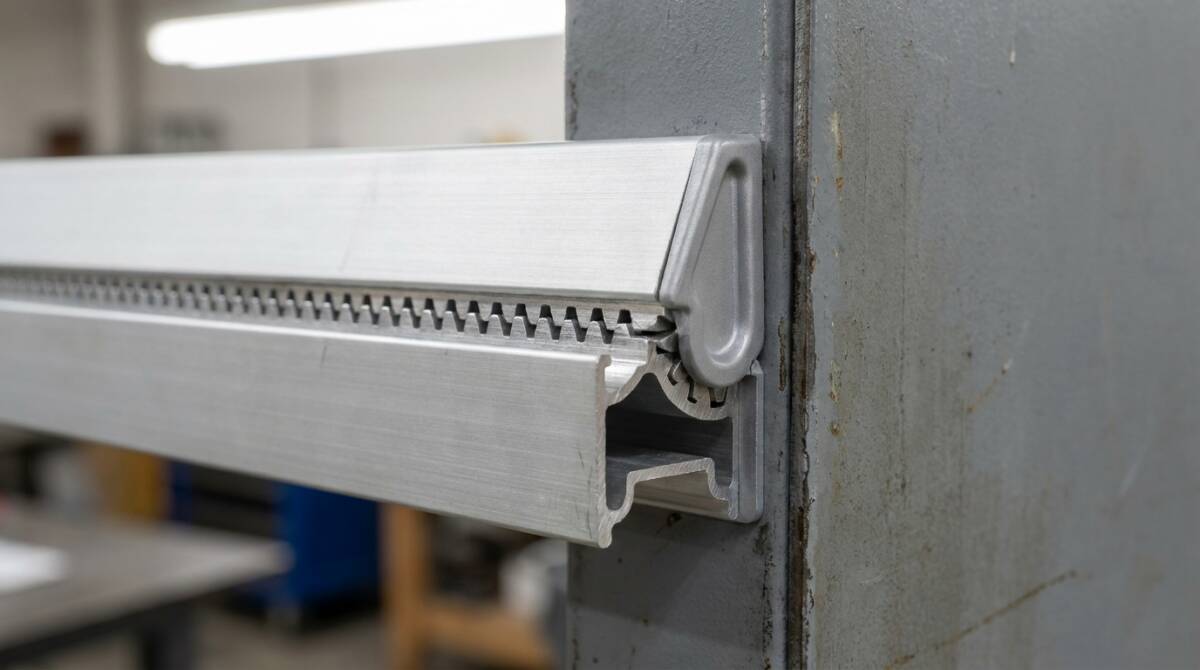
A geared continuous hinge uses two interlocking sets of gear teeth that mesh along the full length of the hinge, held together by a cap channel that snaps over the top. Most are made from extruded aluminum alloy with a low-friction bearing material between the moving parts. The gears keep the door and frame leaves meshed and aligned every time the door swings, so the door tends to stay square and quiet for years. Geared continuous hinges are the usual choice for aluminum storefront entrances, schools, hospitals, and anywhere the door sees heavy daily use. If your entrance is an aluminum storefront system, a geared continuous hinge is often what is already on it or what it should be upgraded to.
Pin-and-barrel continuous hinges
A pin-and-barrel continuous hinge is built like a very long butt hinge. It has a row of knuckles running the full height, wrapped around a single continuous pin. This style is simple, strong, and common in stainless steel for washdown areas, food service, and wet or corrosive environments. It does not have the meshing gear action, so alignment depends more on the pin and knuckles staying true, but a quality stainless pin-and-barrel hinge holds up well where cleanliness and corrosion resistance matter most.
| Type | How it works | Common material | Best for |
|---|---|---|---|
| Geared continuous hinge | Interlocking gears under a cap channel | Aluminum alloy | High-cycle entrances, storefronts, institutions |
| Pin-and-barrel continuous hinge | Full-length knuckles on one pin | Stainless steel | Washdown, food service, corrosive or wet areas |
Mounting styles: full surface, full mortise, half surface, half mortise
Continuous hinges attach to the door and frame in a few standard ways, and the right one depends on the door, the frame, and whether you want the hinge visible or tucked into the edge. These mounting styles are defined in the ANSI/BHMA A156.26 standard that covers continuous hinges, which the Builders Hardware Manufacturers Association publishes.
| Mounting style | Where it attaches | Door prep | Notes |
|---|---|---|---|
| Full surface | Face of the door and face of the frame | Minimal, screws to the surface | Easiest retrofit over worn butt-hinge doors |
| Full mortise | Into the hinge edge of door and frame rabbet | Edge prep needed | Cleanest look, hinge mostly hidden when closed |
| Half surface | Frame rabbet plus face of the door | Partial | Used when the frame is mortised but the door is not |
| Half mortise | Door edge plus face of the frame | Partial | Used when the door is mortised but the frame is not |
Full surface is the one most owners meet, because it is the simplest way to retrofit a continuous hinge onto a door that has been limping along on tired butt hinges. The hinge screws to the faces, so there is little or no cutting into the door or steel door frame. Beyond these four, there are edge-mount and concealed versions that sit inside the door edge, offset models for doors with unusual clearances, and double-acting hinges that let a door swing both ways.
Materials and finishes
Material choice comes down to the environment the door lives in and the look you want at the opening. Aluminum is the workhorse for geared hinges, stainless rules the wet and corrosive spaces, and steel and brass fill in at either end of the range.
| Material | Strengths | Watch for | Typical use |
|---|---|---|---|
| Aluminum | Light, corrosion resistant, common for geared hinges, many anodized finishes | Softer than steel for very heavy abuse | Storefronts, offices, schools, most entrances |
| Stainless steel | Excellent corrosion and wear resistance, hygienic | Higher cost | Food service, healthcare, washdown, exterior exposure |
| Steel | Strong and economical | Needs a protective finish against rust | Interior utility and back-of-house doors |
| Brass | Decorative, corrosion resistant | Softer, usually a design choice | Architectural and heritage openings |
Finishes range from clear and dark bronze anodized aluminum to brushed stainless and painted steel. On a storefront, the hinge finish is usually matched to the door and commercial glass door frames so it reads as part of the entrance rather than an afterthought.
How continuous hinges are sized and rated
Sizing a continuous hinge is different from picking butt hinges. Instead of choosing a hinge size like 4.5 by 4.5 inches and a count, you match one hinge to the door.
Three things drive the choice. First, length, which is cut or ordered to the door height, usually running almost the full height with a small clearance top and bottom. Second, the door weight and width, which decide how heavy a gauge and how strong a hinge the opening needs. Third, the frequency of use, since a door cycled thousands of times a week calls for a heavy duty geared hinge rated for very high cycle counts. Manufacturers publish cycle-test ratings for their hinges, and the heavier commercial models are tested well into the millions of open-and-close cycles. Getting the door weight and standard commercial door size right is the first step in matching the correct hinge.
Why high-traffic commercial doors outgrow butt hinges
Butt hinges work fine on a door that opens a few dozen times a day. The trouble starts on doors that open constantly. Every swing puts a small twisting load on each hinge, and on a heavy door the top hinge carries the most. Over time the top hinge screws loosen in the frame, the door starts to tip, and the gap along the top of the door opens up while the bottom corner drops onto the threshold.
Once a door sags, the problems cascade. The latch no longer lines up with the strike, so the door will not stay shut. The door closer has to fight the misalignment, which wears it out faster. The threshold and bottom sweep scrape, and the weather seal stops sealing. A continuous hinge interrupts that chain because it holds the door square along its whole height, so one worn point cannot drop the door out of alignment.
When to switch a door to a continuous hinge
Not every door needs a continuous hinge. A quiet interior office door on light use is fine on butt hinges. The doors that benefit are the heavy, busy, or already-failing ones. Use the table below to read the symptoms.
| Symptom | Likely cause | What to do |
|---|---|---|
| Door drags on the floor or threshold | Top hinge screws pulling, door sagging | Assess for a continuous hinge retrofit |
| Gap opening at the top of the door | Uneven load on butt hinges | Continuous hinge spreads the load |
| Door will not latch or stay shut | Latch and strike out of alignment | Realign; a continuous hinge keeps it aligned |
| Repeated hinge repairs on the same door | Butt hinges undersized for the traffic | Upgrade to a heavy duty continuous hinge |
| Elongated or stripped hinge screw holes | Metal fatigue around the fasteners | Continuous hinge uses many fasteners along its length |
| Pry marks or security concern at the hinge edge | Open gap between door and frame | Continuous hinge closes the hinge-side gap |
If you are weighing the cost of yet another hinge repair against a longer-term fix, our guide on repair versus replacement helps frame the decision.
Fire-rated and electrified continuous hinges
Fire-rated continuous hinges
Fire-rated door openings have hardware rules of their own, and the hinge is part of the rated assembly. UL-listed fire-rated continuous hinges are made for these openings, tested and labelled for use on fire door assemblies so the complete door, frame, and hardware set keeps its rating. If you are specifying hardware for a rated opening, the hinge has to carry the right listing along with the door. Our overview of fire-rated doors and the Ontario Building Code fire door requirements explain how compliance applies to the whole assembly, the hinge included, and not to the door slab alone.
Electrified continuous hinges
When a door needs power at the edge for an electrified lock, an electric strike, an exit device, or an access control reader, an electrified continuous hinge can carry concealed wiring from the frame into the door. This keeps the wiring protected inside the hinge instead of running an exposed loop. It pairs naturally with electric strikes and panic bars and exit devices on access-controlled entrances. For doors with electrified locking, coordinate the hinge, the lock, and the power supply as one system.
Continuous hinges, accessibility, and code
Accessible entrances have to stay reliable, because a barrier-free door that sags or sticks stops being barrier-free the moment someone in a wheelchair cannot pull it open. Continuous hinges help here in a practical way. By keeping a heavy accessible door square and smooth over years of use, they keep the opening force and clearances closer to where they were set at installation. On power-assisted and automatic doors, a stable hinge also means the door operator is not fighting a door that has drifted out of square.
Barrier-free entrance requirements in Ontario are set out in the Ontario Building Code, and door width and approach clearances matter as much as the hardware. We cover the clearance side in our post on accessible door width rules. The hinge choice is one piece of keeping an accessible door compliant over its life.
Installing and retrofitting a continuous hinge
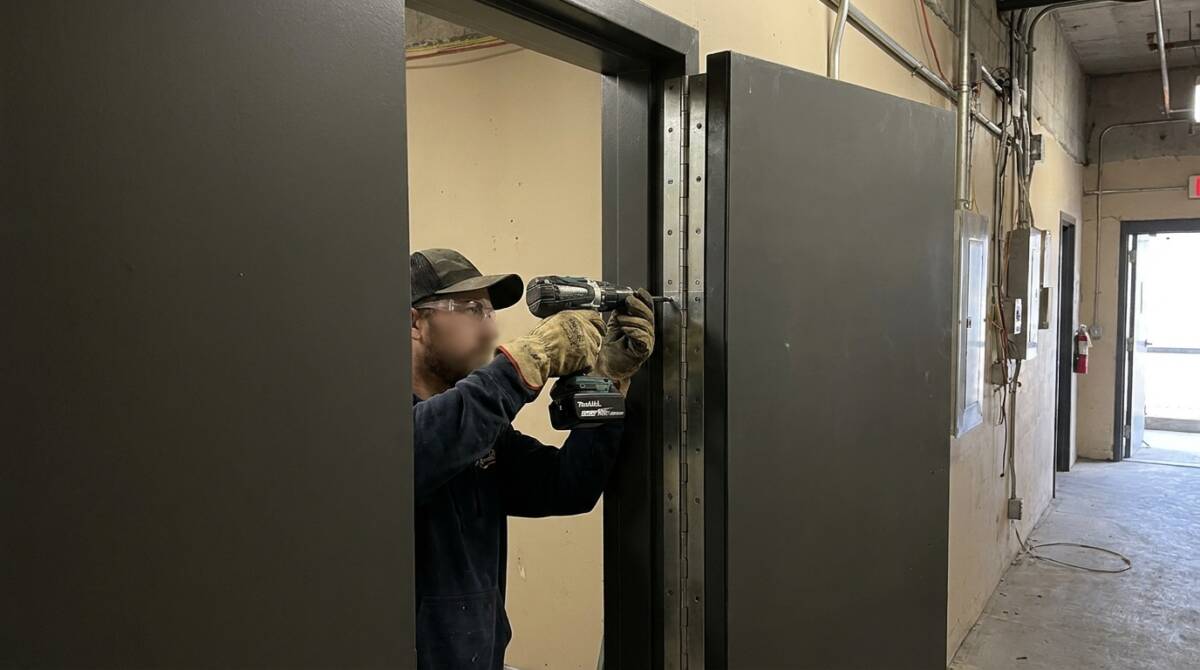
On most jobs, moving a door from butt hinges to a continuous hinge is a retrofit rather than a full door swap. A full-surface geared hinge mounts to the faces of the door and frame, so the existing butt-hinge cutouts can often be left in place or filled, and the new hinge takes the load along the whole edge. The general sequence is to confirm the door hangs square, remove or disable the old hinges as needed, position the hinge so the door clears the frame and floor, and fasten it along its full length with the specified screws into solid material.
The details matter more than they look. The door has to be shimmed and checked for square before the hinge is fixed, the fasteners have to bite into solid frame and door material rather than worn holes, and the clearance at the top and bottom has to be right or the door will bind. On a hollow metal door and frame, that often means hitting the internal reinforcement. This is work we handle as part of commercial door installation and hardware upgrades, and getting it square the first time is what makes the hinge last. For heavier slabs, the pairing with a hollow metal door is common because the reinforced frame gives the fasteners something solid to grab.
Maintenance and lifespan
Continuous hinges are low-maintenance by design, which is part of the appeal. A geared hinge with a sealed bearing material rarely needs lubrication, and the main upkeep is keeping grit out of the gear channel and checking the fasteners during routine service. On exterior doors, a continuous hinge also helps protect the hinge-side gap from weather, which works alongside proper weatherstripping to keep drafts and water out.
Because the load is spread, the hinge itself is seldom the thing that wears out. When a continuous hinge does need attention, it is usually from impact damage, a vehicle or cart strike, or a door that was undersized for its traffic from the start. In those cases the hinge can be replaced on its own without replacing the whole door, which is one more reason the upgrade pays off over the life of the opening.
Repair, replacement, and cost drivers
The cost of a continuous hinge project depends on more than the hinge itself. The table below lays out the main factors.
| Cost driver | Why it matters |
|---|---|
| Hinge type and duty rating | Heavy duty geared and fire-rated hinges cost more than light models |
| Material and finish | Stainless and architectural finishes carry a premium over mill aluminum |
| Mounting style | Mortise prep takes more labour than a surface mount |
| Door and frame condition | A sagging or damaged door may need repair before the hinge goes on |
| Electrified or fire-rated requirements | Wiring, listings, and coordination add scope |
| Access and downtime | Entrances that cannot close during business hours affect scheduling |
For a sense of how a door project fits into your calendar, our replacement timeline guide walks through what to expect, and our note on permits for commercial door work covers when a permit comes into play.
Continuous hinge service across the GTA
If a door at your property is sagging, dragging, or on its third hinge repair this year, a continuous hinge is often the fix that ends the cycle. Commercial Door Pros installs, retrofits, and replaces continuous hinges on commercial doors across Toronto and the Greater Toronto Area, from storefronts and offices to schools, clinics, warehouses, and institutional buildings. We can assess the door, confirm the right hinge type and mounting style, and handle the commercial door service end to end.
To talk through a specific door or book an assessment, contact us for a quote. If a door has failed and will not secure, our emergency commercial door repair service can get it safe and closed while we plan the permanent fix.
Frequently asked questions
What is a continuous hinge?
A continuous hinge is a single hinge that runs the full height of a door, joining it to the frame along the entire edge. It spreads the door’s weight evenly instead of concentrating it on three or four butt hinges, which is why it lasts so well on busy commercial doors.
Is a continuous hinge the same as a piano hinge?
In the broad sense, yes. A piano hinge is any full-length hinge, and continuous hinge is the term the commercial trade uses for the heavier versions. The light piano hinges sold for cabinets and lids are the same idea built for much smaller loads.
What is a geared continuous hinge?
A geared continuous hinge uses two sets of interlocking gear teeth that mesh along the full length under a cap channel. The gear action keeps the door and frame aligned on every swing, which makes it the common choice for high-traffic entrances and storefronts.
What is the difference between a continuous hinge and butt hinges?
Butt hinges are separate hinges that carry the load at three or four points. A continuous hinge carries it along the whole door edge. On heavy or high-use doors, that spread-out load stops the sagging and screw pull-out that eventually takes butt hinges out of alignment.
How long does a continuous hinge last?
Heavy duty commercial continuous hinges are tested to very high cycle counts, often well into the millions of open-and-close cycles. On a correctly sized door, the hinge usually outlasts the other hardware and is rarely the part that fails first.
Can you put a continuous hinge on an existing commercial door?
Usually yes. A full-surface continuous hinge mounts to the faces of the door and frame, so most doors can be retrofitted without replacing the slab. The door needs to be square and the fasteners need solid material to grip, which is why it is best done as a proper assessment and install.
How do you install a continuous hinge?
The door is checked and shimmed square, the old hinges are removed or disabled, the continuous hinge is positioned for correct clearance at the frame and floor, and it is fastened along its full length into solid door and frame material. Full-surface models need little or no cutting, while mortise styles need edge prep.
What sizes do continuous hinges come in?
Continuous hinges are sized to the door height rather than sold in small increments like butt hinges. They are cut or ordered close to the full door height with a small clearance top and bottom, and the gauge and duty rating are matched to the door weight and traffic.
How much weight can a continuous hinge hold?
Because the load is spread along the whole edge, a correctly specified continuous hinge can carry very heavy doors that would quickly wear out butt hinges. The exact rating depends on the model and material, so the hinge is matched to the door weight, width, and frequency of use.
What are the mounting types for continuous hinges?
The four standard styles are full surface, full mortise, half surface, and half mortise. Full surface is the easiest retrofit because it screws to the faces. Full mortise gives the cleanest look with the hinge set into the edge. The half styles suit doors or frames that are prepped on only one side.
What is an offset continuous hinge?
An offset continuous hinge is designed so the pivot point sits away from the door and frame faces, which changes the door’s clearance and swing. It is used where a standard hinge geometry would not give the needed clearance at the opening.
What is a full mortise continuous hinge?
A full mortise continuous hinge sets into the hinge edge of the door and into the frame rabbet, so most of the hinge is hidden when the door is closed. It gives a clean appearance but needs edge preparation on both the door and the frame.
Are continuous hinges available fire-rated?
Yes. UL-listed fire-rated continuous hinges are made for fire door openings and are tested and labelled for use on rated assemblies. On a fire door, the hinge has to carry the correct listing so the complete door, frame, and hardware set keeps its rating.
What is an electrified continuous hinge?
An electrified continuous hinge carries concealed wiring from the frame into the door to power electrified locks, strikes, exit devices, or access control. It protects the wiring inside the hinge rather than running an exposed loop across the opening.
Do continuous hinges help with accessibility?
They help indirectly. By keeping a heavy barrier-free door square and smooth over years of use, a continuous hinge keeps opening force and clearances closer to where they were set, which matters for accessible entrances and power-assisted doors.
What materials are continuous hinges made from?
The common materials are aluminum, which is standard for geared hinges, stainless steel for wet and corrosive areas, steel for economy on interior doors, and brass for decorative openings. Finishes range from anodized aluminum to brushed stainless and painted steel.
What is the most common hinge size?
For standard butt hinges on commercial doors, 4.5 by 4.5 inches is one of the most common sizes. Continuous hinges do not use that sizing because one hinge runs the full door height instead of several smaller hinges.
Can a continuous hinge fix a sagging door?
Often, yes, if the door and frame are still sound. Because the hinge holds the door along its whole height, it corrects and then prevents the drooping that happens when butt hinge screws pull loose. If the door or frame is damaged, that gets addressed first.
What is a double-acting continuous hinge?
A double-acting continuous hinge lets a door swing in both directions, so it can be pushed open either way and returns to centre. It is used on traffic doors between spaces where people move through in both directions with their hands full.
Continuous hinge versus pivot hinge, which is better?
Both suit heavy doors. A continuous hinge supports the door along its whole edge, while a pivot hinge carries it at the top and bottom. The right choice depends on the door, the frame, the finish you want, and the clearance at the opening, which is worth confirming with an assessment.


