

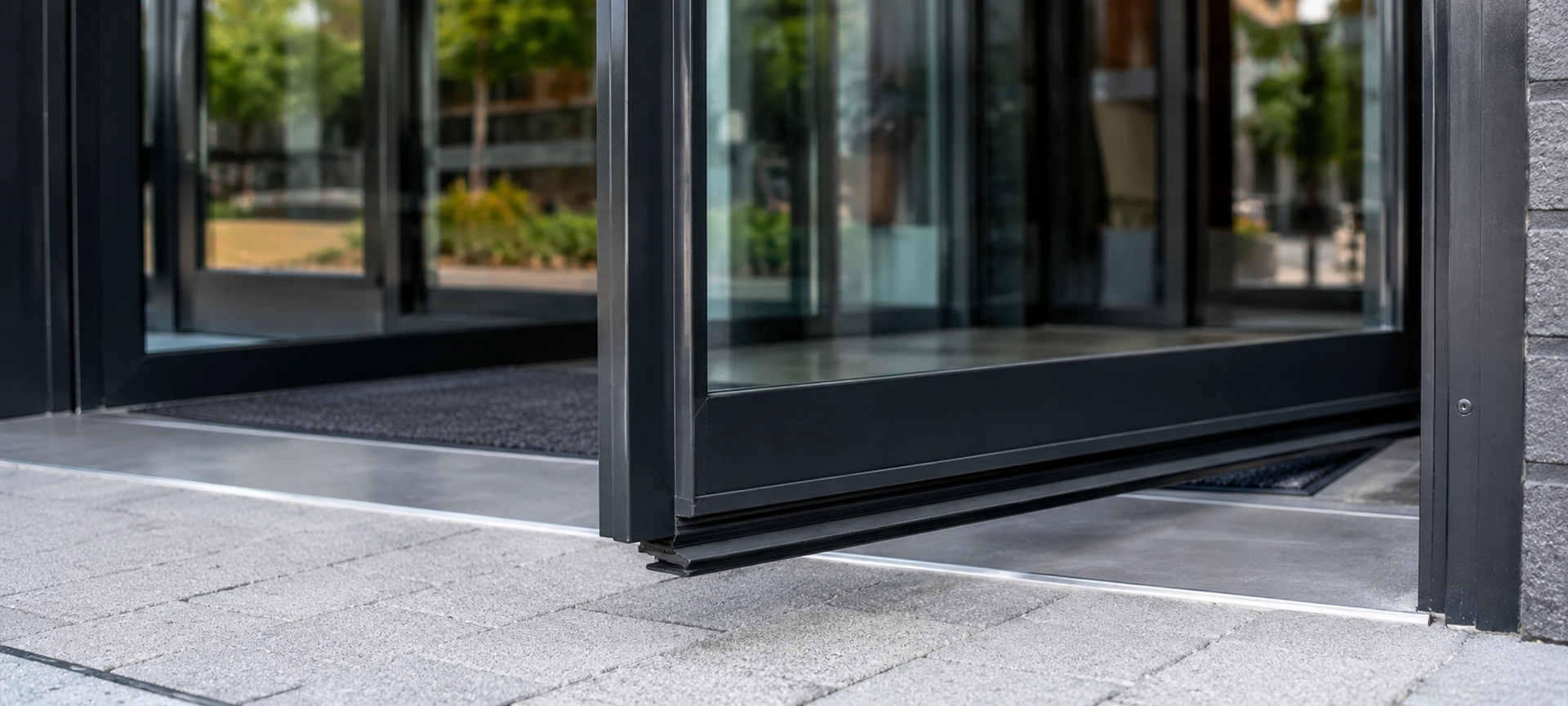
Why Storefront Door Seals Matter in Summer
A commercial door should close cleanly against its frame and create a tight barrier around the top, sides, and bottom. When that seal breaks down, outdoor air enters the building and conditioned indoor air leaks out. Poor storefront door energy efficiency can lead to:- Higher cooling costs
- Hot spots near the entrance
- More strain on the air conditioning system
- Dust and outdoor odours entering the space
- Insects getting through gaps
- Moisture entering during summer storms
- A less comfortable customer experience
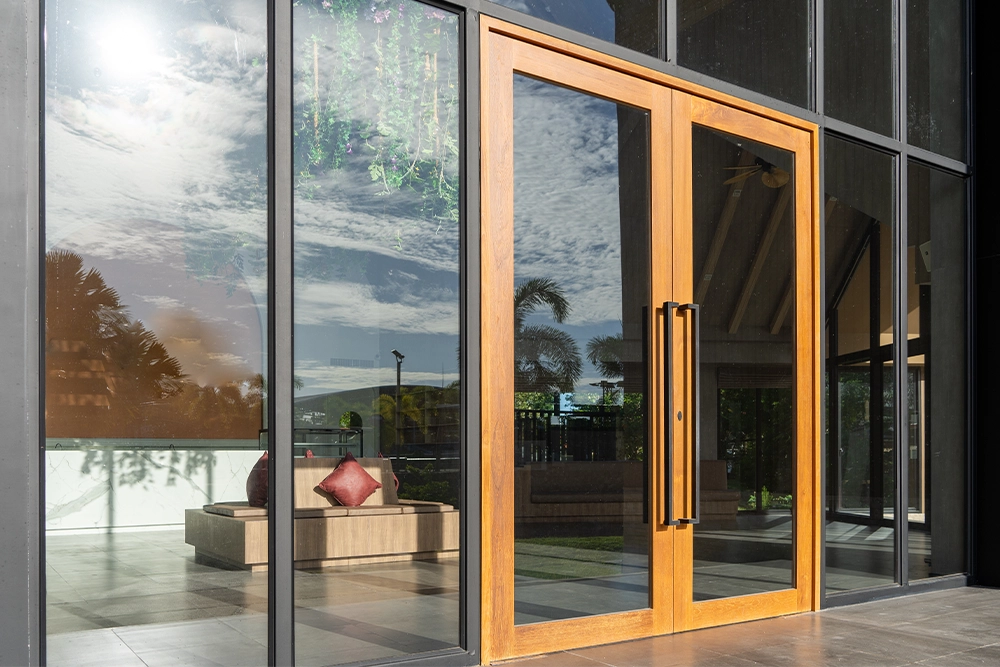
What Damages Commercial Door Weather Stripping?
Storefront door seals wear out for practical reasons. Toronto weather, daily traffic, and small building shifts all affect how the door sits in the opening. Winter is one of the biggest causes. Ice, salt, slush, and freezing temperatures can harden rubber seals and weaken adhesives. By summer, the damage becomes easier to feel because cooled air starts escaping through the same worn areas. Common causes include:- Winter salt and moisture: Salt can dry out rubber and corrode nearby metal components.
- Frozen door bottoms: Sweeps can crack or tear after dragging over ice or packed snow.
- Foundation movement: Small shifts can cause the door to sit unevenly in the frame.
- Loose hinges: A sagging door may stop pressing evenly against the seal.
- Heavy foot traffic: Busy entrances wear down bottom sweeps faster.
- Poor past repairs: Generic strips may fail early if they do not match the door type.
- Misaligned closers: A door that slams or fails to latch can crush or distort the gasket.
Signs Your Storefront Door Is Losing Cooled Air
A leaking storefront door is usually easy to notice once you know what to check. The signs can show up in comfort, sound, light, and utility costs. Look for these warning signs:- You feel warm air near the entrance while the air conditioning is on.
- The door rattles when traffic passes outside.
- Light is visible along the sides or bottom of the closed door.
- The sweep looks torn, flattened, or uneven.
- The door drags at the bottom or catches on the frame.
- Customers or staff mention a hot entrance area.
- Dust gathers near the threshold.
- Insects appear near the door even when it stays closed.
- The air conditioner runs for long periods without cooling the front area well.
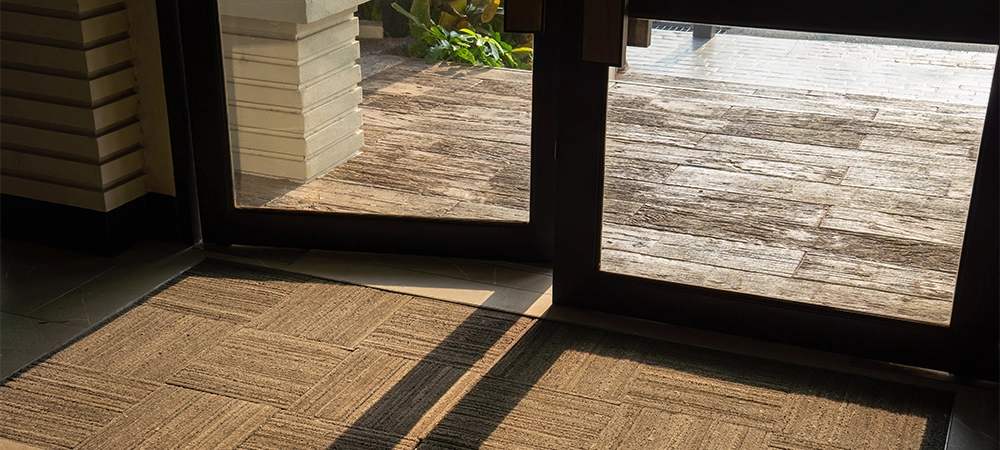
The 3-Step Light and Dollar Bill Test
You do not need special tools to do a first check. These simple tests can help you decide whether your commercial door needs a professional inspection. Do the test outside business rush hours so the door can stay closed long enough for a proper check.1. Check for Light Around the Door
Stand inside the business with the storefront door fully closed. Look along the hinge side, latch side, top frame, and bottom threshold. If you see daylight through the perimeter, air can pass through the same gaps. Pay close attention to the bottom corners because these areas often fail first. For the best result, do this test when it is brighter outside than inside. Early morning or late afternoon can make gaps easier to see.2. Use the Dollar Bill Test
Place a dollar bill between the door and the weather stripping, then close the door. Pull the bill out slowly. A good seal should hold the bill with light resistance. If the bill slides out with no pressure, the seal is likely compressed, worn, or misaligned. Repeat this test in several areas:- Top of the latch side
- Middle of the latch side
- Bottom of the latch side
- Hinge side
- Across the bottom sweep
3. Feel for Drafts With the AC Running
Turn on the air conditioning and stand near the closed door. Move your hand slowly around the perimeter without touching the frame. If you feel moving air, the seal is failing in that area. On a hot day, you may also feel outdoor heat entering at the bottom or corners.Why Bottom Sweeps Often Fail First
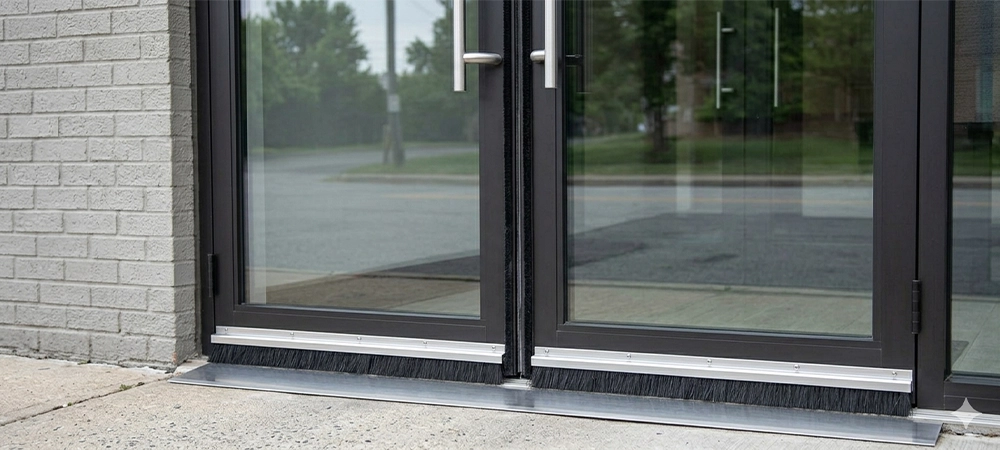
The bottom sweep takes the most abuse because it moves across the threshold every time the door opens. It also faces water, salt, grit, cleaning chemicals, and foot traffic. On many storefront doors, the sweep becomes flat or curled over time. Once that happens, it stops making even contact with the threshold. A small gap at floor level can make the entrance feel warmer and allow dust or insects inside. The sweep should seal the gap without making the door difficult to use.Why Heavy-Duty Brush Seals Can Be a Smart Upgrade
Standard rubber or vinyl seals work for many doors, but high-traffic commercial entrances often benefit from heavy-duty brush seals. These seals use dense bristles to close uneven gaps while allowing smoother door movement. Brush seals are especially useful for storefront doors that deal with frequent use, slight threshold irregularities, or small alignment changes. Benefits can include:- Better contact across uneven surfaces
- Less friction than an overly tight rubber sweep
- Improved resistance to dust and insects
- Longer performance in busy entrances
- Better tolerance for small door movement
- Cleaner operation for aluminum storefront doors
Weather Stripping Replacement vs. Door Replacement
A leaking storefront door does not always mean the entire door needs replacement. In many cases, the frame and slab are still in good condition, and the energy loss comes from worn perimeter parts. Weather stripping replacement may be the better first step when:- The door still closes and latches properly.
- The frame is straight and secure.
- The hinges are stable.
- The glass, aluminum, or steel door is still sound.
- The main issue is air leakage around the edges.
- The sweep, gasket, or threshold is visibly worn.
- The door is warped or badly damaged.
- The frame is bent, loose, or corroded.
- The door no longer latches safely.
- There are repeated break-in issues.
- The glass or panel system is failing.
- Repairs have become too frequent.
How Poor Seals Affect More Than Energy Bills
Energy loss is the main concern in summer, but damaged door seals can affect the rest of the business too. A storefront entrance is part of your security, comfort, safety, and brand presentation. A poorly sealed door may:- Make the front of the business feel uncomfortable
- Let street noise enter the space
- Create a draft near reception or checkout areas
- Allow rainwater to creep in during storms
- Cause staff to adjust the thermostat too often
- Make the entrance look neglected
- Put extra pressure on closers and latches
What a Professional Door Seal Audit Includes
A professional audit checks more than the visible strip around the door. The technician should look at the full opening because leaks often come from more than one issue. This matters because replacing the strip alone may fail quickly if the door is sagging or the closer is set incorrectly. A proper inspection may include:- Door alignment check
- Weather stripping inspection
- Bottom sweep review
- Threshold inspection
- Closer and latch check
- Hardware review
Why Toronto Businesses Should Fix Door Seals Before Peak Heat
Waiting until the hottest part of summer can mean higher energy use, less comfort, and more strain on your cooling system. It can also make the repair feel urgent when the entrance becomes uncomfortable for staff and customers. A planned repair is usually easier to schedule around business hours. In many cases, commercial door weather stripping replacement can be handled with less disruption than larger door repairs. If your storefront includes older glazing, aluminum frames, or commercial window systems, it may also be worth reviewing the rest of the entrance. Commercial Door Pros can assess related commercial windows and doors in Toronto if the issue extends beyond the door seals.Book a Storefront Door Seal Check Today
A small gap around your storefront door can waste cooled air all summer. If your entrance feels warm, noisy, dusty, or difficult to cool, the weather stripping and bottom sweep should be checked before assuming the full door needs replacement. Commercial Door Pros helps Toronto businesses repair, maintain, and replace commercial door components for better comfort, security, and energy efficiency. From aluminum storefront doors to steel commercial entrances, our technicians can inspect the full opening and recommend the right fix. Book a commercial door weather stripping replacement in Toronto today and get your storefront ready for summer traffic.
Frequently Asked Questions
How long does commercial door weather stripping last? Commercial door weather stripping often lasts a few years, but high-traffic storefronts may wear through seals faster. Toronto winters, salt, moisture, and daily use can shorten the lifespan, so seasonal checks are best. Can weather stripping help with insects and dust? Yes, properly fitted weather stripping and bottom sweeps can reduce gaps where dust, insects, and outdoor debris enter. This is especially useful for storefronts near busy sidewalks, parking lots, or high-traffic streets. Are brush seals better than rubber sweeps? Brush seals can work better for busy storefront doors or slightly uneven thresholds. They reduce gaps while allowing smoother movement. Rubber sweeps may still suit some doors, so the best option depends on the door, frame, and threshold. Do I need a new door if the seals are leaking? You may only need weather stripping, sweep, threshold, or alignment repairs if the door and frame are still in good shape. A full replacement is more likely when the door is warped, damaged, insecure, or repeatedly failing. How often should commercial door seals be checked? Check storefront door seals at least twice a year, ideally before summer and winter. High-traffic businesses should inspect them more often because bottom sweeps, gaskets, closers, and thresholds wear faster with daily use.The bottom of the opening also depends on the threshold under the door, so it is worth pairing this audit with our guide to commercial door thresholds to seal the whole entrance.
Glazing plays a large part in those energy numbers too. Our overview of commercial glass types, including Low-E and insulated units, covers how the glass itself affects heating and cooling costs.
The seal along the bottom edge of the door matters as much as the perimeter weatherstripping. Our guide to commercial door sweeps explains how to seal the gap under the door.


