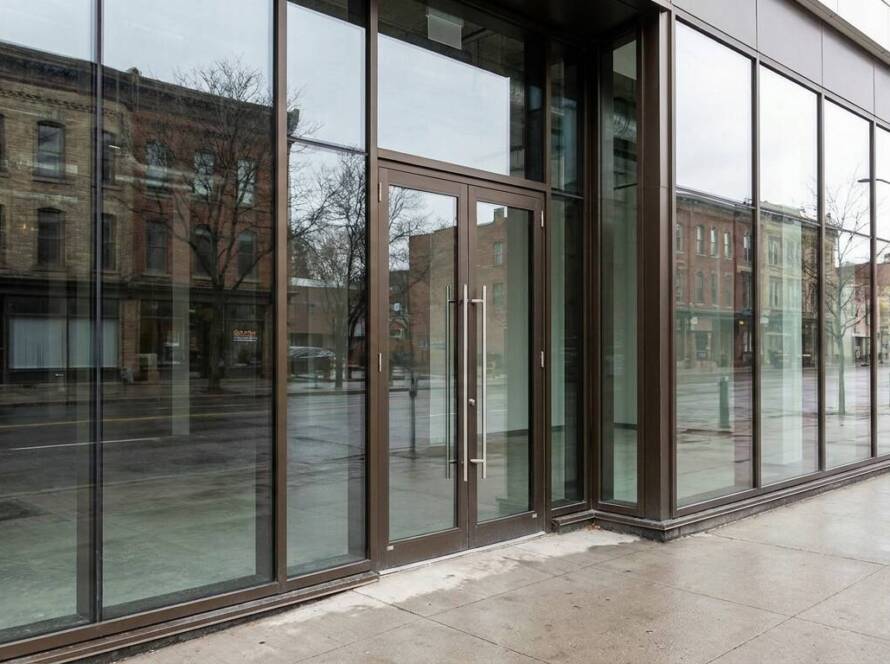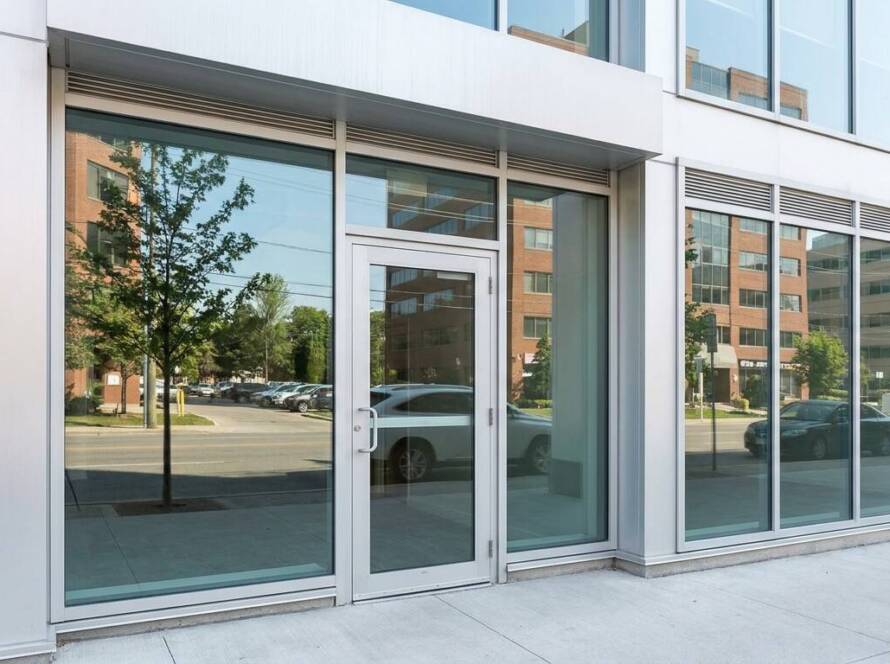
If the glass in your storefront or office windows has gone cloudy, hazy, or looks like there is a permanent layer of mist you cannot wipe away, you are almost certainly looking at a failed insulated glass unit. It is one of the most common glass problems we see on commercial buildings across the Greater Toronto Area, and the good news is that in most cases the fix does not mean tearing out the whole window.
This guide explains what an insulated glass unit actually is, how it is built, why the seal fails, how to tell a failed unit from a dirty one, and how to decide between repairing the glass and replacing the window. The focus here is building glazing: the sealed double or triple pane units used in commercial windows, aluminum storefront systems, and commercial glass doors. It is not about insulated drinkware or thermos cups, which share the name but nothing else.
What is an insulated glass unit?
An insulated glass unit, often shortened to IGU, is a factory-sealed assembly of two or more panes of glass separated by a spacer and bonded around the edge so the gap between the panes stays permanently sealed. That sealed gap is filled with dry air or an inert gas, and it is what gives the unit its insulating value. People also call it a sealed unit, a thermal pane, or simply double glazing.
The single pane of glass you find in old storefronts does almost nothing to slow heat moving through it. An insulated glass unit traps a layer of still gas between two panes, and still gas is a poor conductor of heat. That trapped layer, combined with modern coatings, is what keeps winter heat inside and summer heat out. When people say a window is energy efficient, the sealed unit is doing most of that work.
Because the unit is sealed at the factory, it cannot be opened, cleaned inside, or refilled in the field. The whole assembly is treated as one replaceable component. That single fact drives almost every repair decision later in this guide.
How an insulated glass unit is built
From the outside an IGU looks like one piece of glass, but there are several parts working together, and each one can be part of a failure. Understanding the anatomy makes it much easier to see why a foggy window is a sealed unit problem and not a cleaning problem.
| Component | What it does | Why it matters |
|---|---|---|
| Glass panes (lites) | Two or three panes, often with a coating on one surface | Can be tempered or laminated for safety and strength |
| Spacer bar | Holds the panes a set distance apart around the edge | A warm-edge spacer reduces edge heat loss and condensation |
| Desiccant | A drying agent packed inside the spacer | Absorbs the small amount of moisture sealed inside at the factory |
| Primary seal | A thin band of polyisobutylene between spacer and glass | The main barrier that keeps gas in and moisture out |
| Secondary seal | A structural sealant around the outer edge | Holds the unit together and protects the primary seal |
| Gas fill | Dry air, argon, or krypton in the sealed cavity | Slows heat transfer better than ordinary air |
The spacer runs around the perimeter and sets the width of the air space. Older units used aluminum spacers, which conduct heat and tend to show condensation along the edges in winter. Warm-edge spacers made of stainless steel, foam, or composite material cut that edge heat loss and keep the glass edge warmer. Inside the spacer sits the desiccant, a granular drying agent that soaks up the trace moisture trapped when the unit is assembled. As long as the seals hold, that desiccant keeps the cavity clear and dry for years.
Single, double, and triple glazing compared
Most commercial buildings in Ontario run double glazing, which means two panes and one sealed cavity. Triple glazing adds a third pane and a second cavity, which improves insulation at the cost of weight and price. Single glazing is now mostly found in older storefronts that were never upgraded. Here is how the three stack up for a commercial property.
| Glazing | Panes and cavities | Insulation | Best fit |
|---|---|---|---|
| Single pane | One pane, no cavity | Poor | Legacy storefronts, interior partitions |
| Double glazing | Two panes, one cavity | Good | The standard for most GTA commercial glazing |
| Triple glazing | Three panes, two cavities | Best | High-performance builds, cold exposures, quiet interiors |
Triple glazing is not automatically the right answer. The extra pane adds weight that the frame and hardware have to carry, and the payback depends on how the space is used. For many retail and office fronts, a well-specified double unit with a good coating and argon fill gives most of the benefit at a lower cost. If you are weighing a bigger upgrade, our guide on how to choose the right commercial door for a new build or renovation walks through the same trade-offs for entrances.
Coatings and gas fills that do the real work
Two panes and a sealed cavity are only the starting point. The features that turn a basic double unit into a high-performance one are the low-emissivity coating and the gas fill.
A low-emissivity coating, usually called Low-E, is a microscopically thin metallic layer applied to one of the inner glass surfaces. It reflects long-wave heat while letting visible light through. In a Toronto climate that means it helps hold furnace heat inside during winter and reflects a good share of solar heat back out during summer. You cannot see it in normal light, but it is the single biggest reason a modern sealed unit outperforms an old one. The different materials and coatings are covered in more depth in our guide to commercial glass types.
The cavity is often filled with argon, a harmless inert gas that is denser than air and slows heat transfer across the gap. Krypton performs even better and is used in thinner cavities, though it costs more. Over the life of the unit a small amount of fill gas naturally migrates out through the seals, which is normal and slow. A sudden loss of fill, on the other hand, points to a seal that has started to fail.
How insulated glass saves energy, and how it is rated
Energy performance is where the sealed unit earns its keep. A few standard ratings describe how a unit behaves, and knowing them helps when you compare replacement quotes.
| Rating | What it measures | Which way is better |
|---|---|---|
| U-factor | How much heat the unit lets through | Lower is better |
| Solar heat gain coefficient | How much solar heat passes through | Lower keeps summer heat out, higher helps in winter-dominated spaces |
| Visible transmittance | How much daylight passes through | Higher means a brighter interior |
| Condensation resistance | How well the unit resists interior condensation | Higher is better in a cold climate |
In Canada, window and glazing performance is described through the NAFS standard and the CSA A440 series, and consumer-facing energy performance is recognized through ENERGY STAR, which is administered here by Natural Resources Canada. You can read the official criteria on the Natural Resources Canada ENERGY STAR windows, doors and skylights page. For a commercial owner the practical takeaway is simple: a lower U-factor means lower heating load, and a solar heat gain coefficient chosen for the orientation of the glass keeps cooling costs in check. The same thinking carries over to full window assemblies, which we cover in the commercial windows guide.
Why insulated glass units fail: seal failure explained
Every sealed unit has a working life. The seals that keep the cavity airtight are organic materials, and over years of thermal cycling, sun exposure, and moisture they slowly break down. When the seal loses its grip, the cavity is no longer airtight. Humid outside air works its way in, the desiccant eventually saturates, and moisture starts condensing on the inner glass surfaces. That is seal failure, and the visible result is the foggy or cloudy look between the panes.
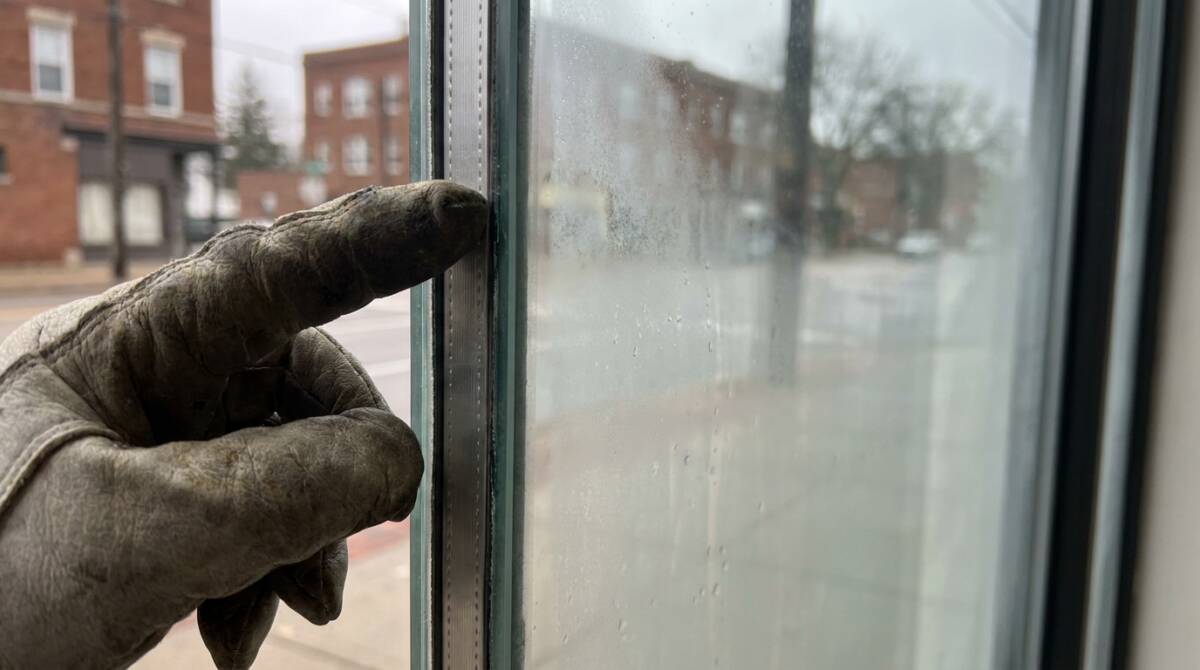
Seal failure is a when, not an if, but several factors speed it up or slow it down.
| Cause | What happens |
|---|---|
| Age and thermal cycling | Daily expansion and contraction slowly works the seals loose |
| Standing water at the glazing pocket | Poor drainage keeps the seal edge wet and breaks it down faster |
| Heat buildup | Dark interior films or tight reveals can overheat the edge seal |
| Poor original installation | Missing setting blocks or blocked weep holes stress the unit |
| Physical movement | Frame flex, building settlement, or a hard impact cracks the seal |
Drainage matters more than most owners expect. If the glazing pocket that cradles the bottom edge of the unit cannot drain, water sits against the secondary seal and shortens its life. This is the same reason failed or missing seals around a frame cause trouble, which is why we treat weatherstripping and seal replacement as part of keeping glazing healthy, not a cosmetic extra.
How to tell a sealed unit has failed
A foggy window is the headline symptom, but there are a few telltale signs that separate a failed sealed unit from a surface that just needs cleaning.
The clearest test is this: if the haze, film, or moisture is between the panes and you cannot reach it by wiping either the inside or the outside surface, the seal has failed. A surface problem wipes away. A sealed unit problem does not. Other signs include a rainbow or oily sheen in certain light, visible droplets or running water inside the glass on cold mornings, a patch of distortion, and a noticeable drop in how well that window holds temperature compared with its neighbours.
One point that surprises owners: a failed unit does not always look foggy every day. Early seal failure can show up only on humid days or cold mornings and clear up by afternoon. That intermittent fog is still a failed seal, and it will get worse, so it is worth logging when you notice it. If several units in the same elevation start fogging around the same time, that usually means they were installed together and have reached the end of their service life together.
Repair or replace: can a foggy sealed unit be fixed?
This is the question almost every owner asks, so here is the direct answer. A failed insulated glass unit cannot be reliably repaired. There are defogging services that drill the unit, clear the moisture, and reseal it, but they do not restore the gas fill, the desiccant, or the original energy rating, and the fog often returns. For a commercial building, the dependable fix is to replace the sealed unit itself.
The important distinction is that replacing the sealed unit is usually not the same as replacing the whole window. In most commercial frames, the glass unit can be taken out and a new one set in while the existing frame, sash, and hardware stay in place. That is far less disruptive and less costly than a full window replacement. The decision tree looks like this.
| Situation | Usual approach |
|---|---|
| Fogged glass, frame in good shape | Replace the sealed unit only, keep the frame |
| Fogged glass plus a corroded or bent frame | Replace the full window or storefront section |
| Cracked or broken pane, safety risk | Secure the opening, then replace the unit promptly |
| Many units failing across one facade | Plan a phased replacement of all aged units |
If you want a fuller framework for this call, our article on repair versus replacement for commercial doors and windows covers the cost and downtime factors in detail, and the piece on whether you can replace just one panel of a storefront door applies the same logic to entrance glass. When a pane is cracked or shattered rather than fogged, that is a different urgency, and our emergency commercial glass repair service exists for exactly that.

Safety glazing and code for commercial insulated glass
Comfort and energy are only part of the picture with commercial glass. Where glass sits in or next to a door, at low level, or anywhere a person could walk into it, the Ontario Building Code treats it as a hazardous location and requires safety glazing. Safety glazing means the glass is made to break safely, either tempered so it crumbles into small blunt pieces, or laminated so the fragments stay bonded to an interlayer.
An insulated glass unit in one of these locations has to use safety glass for the pane or panes that need it. The hazardous-location rules sit within the glass requirements of the building code, and the Ontario regulation is published on the Government of Ontario building code regulation page. This is one reason you should not treat a replacement sealed unit as a simple like-for-like glass order. The replacement has to match the safety rating of the original, and a qualified glazier will confirm that before ordering. The difference between tempered and laminated glass, and where each belongs, is covered in the commercial glass types guide.
If your project changes the opening, the storefront, or the structure around the glass, you may also need a permit. We lay out when that applies in our overview of when GTA businesses need permits for door, window, or storefront work.
Commercial insulated glass is not the same as residential
The physics of a sealed unit are the same in a house and a warehouse, but commercial glazing carries demands a home window never sees. Units are larger and heavier, so they need stronger spacers, thicker glass, and sometimes laminated panes just to carry their own weight and wind load. Storefronts take constant traffic, so the glass is more likely to be tempered or laminated for safety. Commercial frames, whether aluminum storefront systems or window wall, hold the units differently from the vinyl frames common in homes, which changes how a failed unit is removed and reset.
There is also the matter of access and downtime. Replacing a fogged unit on the third floor of an office over a busy sidewalk is a different job from swapping a ground-floor pane, and planning for that is part of a professional quote. Our look at the commercial replacement timeline explains what to expect from measurement to final install.
What drives the cost of replacing an insulated glass unit
Every building is different, so rather than quote numbers that would not fit your situation, it is more useful to understand what moves the price. When you know the drivers, a quote makes sense and you can compare two of them fairly.
| Cost driver | Why it affects the price |
|---|---|
| Unit size and weight | Larger units cost more to make and need more labour and lifting to set |
| Glass makeup | Tempered, laminated, and triple glazing cost more than plain double |
| Coating and gas fill | Low-E coatings and argon or krypton add to the unit price |
| Access and height | Upper floors or busy sidewalks need lifts, traffic control, or after-hours work |
| Frame condition | A sound frame keeps it to glass only, a damaged one widens the job |
| Quantity and scheduling | Replacing several units in one visit lowers the cost per unit |
Because sealed units are usually made to order from measured openings, there is almost always a lead time between measuring and installing. If a broken pane leaves an opening exposed in the meantime, the opening is boarded or temporarily glazed first for security and weather. Replacing glass only, rather than the whole window, is where owners find the biggest savings, which is covered in our commercial glass replacement service.
Maintenance that extends sealed unit life
You cannot service the inside of a sealed unit, but you can protect the seals and catch problems early. A little attention to the frame and drainage around the glass adds years to the units.
| Task | How often | Why it helps |
|---|---|---|
| Clear weep holes and drainage channels | Twice a year | Keeps water off the edge seal |
| Inspect exterior sealant and gaskets | Yearly | Catches gaps before water reaches the unit |
| Check for early fogging | Seasonally | Lets you plan replacement before it spreads |
| Clean glass with mild products | As needed | Avoids harsh chemicals that attack seals and frames |
| Keep the glazing pocket free of debris | Yearly | Prevents trapped moisture at the bottom edge |
Harsh cleaners and abrasive pads are a quiet enemy of long seal life, so the same gentle approach we recommend for cleaning and maintaining aluminum storefront doors applies to glazing. Condensation that shows up seasonally is also worth watching, since some glass and door issues track the weather, a pattern we cover in commercial door problems that get worse in summer.
Choosing replacement insulated glass units
When it is time to order new units, a few specifications are worth getting right rather than defaulting to the cheapest match. Match the safety rating of the original, since a hazardous location still needs tempered or laminated glass. Choose a Low-E coating suited to the orientation of the glass, a south or west face benefits from stronger solar control than a shaded north face. Specify argon fill and a warm-edge spacer for better edge performance and less winter condensation. Confirm the overall thickness fits the existing frame and glazing pocket. A professional measure and quote should state all of this clearly, and if your frames are aged as well, replacing the full window may be the better long-term value.
For brand new openings or a renovation that changes the glazing, start with the commercial window installation process and the broader commercial window services overview, which cover specification, measurement, and fitting from the start.
When to call a commercial glass professional in the GTA
If you are seeing fog between the panes, water inside the glass, a cracked pane, or a noticeable cold draft near a window, it is time for an assessment. A commercial glazier can confirm whether it is a sealed unit problem, measure accurately, match the safety and energy specifications, and plan the work around your business hours so you are not shut down during the day. A unit that is only starting to fog is not an emergency, but a cracked or shattered pane is, because it is both a security and a safety risk.
Commercial Door Pros works with business owners, property managers, and facility teams across Toronto and the wider GTA on sealed units, storefront glass, and glass door repair. If you have foggy windows or glass that needs attention, you can contact our team to arrange an assessment or request a quote, and for anything urgent our emergency commercial glass repair line can secure the opening fast.
Frequently asked questions about insulated glass
What is insulated glass?
Insulated glass is a factory-sealed unit of two or more glass panes separated by a spacer, with the gap filled with dry air or an inert gas. The sealed gas layer slows heat transfer, which is what makes the window energy efficient compared with a single pane.
Is a double pane the same as insulated glass?
Yes. A standard double-pane window is an insulated glass unit with two panes and one sealed cavity. The terms double pane, double glazing, sealed unit, and insulated glass unit all describe the same basic assembly.
How long does insulated glass last?
Service life depends on quality, exposure, and drainage. Many commercial sealed units last well over a decade, and some much longer, but units in wet, sunny, or poorly drained locations can fail sooner. Seal failure, not the glass itself, is almost always what ends a unit’s useful life.
Why is my commercial window foggy between the panes?
Fog or haze that sits between the panes and will not wipe off means the edge seal has failed and moist air has entered the sealed cavity. The desiccant inside can no longer keep up, so moisture condenses on the inner glass. The unit needs to be replaced.
Can a foggy sealed unit be repaired?
Not reliably. Defogging services exist, but they do not restore the gas fill, the desiccant, or the original energy rating, and the fog often comes back. For a commercial property, replacing the sealed unit is the dependable fix.
Do I have to replace the whole window if the glass is fogged?
Usually not. If the frame and hardware are sound, the sealed unit alone can be removed and replaced while the frame stays in place. The whole window only needs replacing when the frame itself is corroded, bent, or otherwise failing.
How can I tell seal failure from a dirty window?
Wipe both the inside and outside glass surfaces. If the haze or film is still there, it is between the panes and the seal has failed. A surface problem wipes clean, a sealed unit problem does not.
What causes insulated glass seals to fail?
Age and daily thermal cycling are the main causes, sped up by standing water at the glazing pocket, blocked drainage, heat buildup at the edge, poor original installation, and physical movement or impact. Good drainage and sealant maintenance slow it down.
What is a warm-edge spacer?
A warm-edge spacer is the bar around the perimeter of the unit made from low-conductivity material such as stainless steel, foam, or composite, rather than plain aluminum. It keeps the glass edge warmer, which reduces edge heat loss and interior condensation in winter.
What does Low-E glass do in an insulated unit?
Low-E is a thin metallic coating on an inner glass surface that reflects long-wave heat while letting daylight through. It helps hold heat inside in winter and reflects solar heat out in summer, and it is the biggest reason a modern sealed unit outperforms an older one.
Is argon gas worth it?
Argon is denser than air and slows heat transfer across the cavity, so it improves the U-factor at a modest cost. For most commercial glazing it is a worthwhile upgrade. A slow loss of fill over many years is normal, but a sudden loss points to a failing seal.
Does insulated glass need to be safety glass?
It depends on location. Where glass sits in or beside a door, at low level, or anywhere someone could walk into it, the Ontario Building Code requires safety glazing, which means tempered or laminated glass. A replacement unit in a hazardous location has to match that rating.
How thick is a commercial insulated glass unit?
Overall thickness varies with the glass and cavity used, and it has to match the frame and glazing pocket the unit sits in. That is why replacement units are measured and made to order rather than bought off the shelf, so the new unit fits the existing opening.
How long does it take to get a replacement sealed unit?
Because units are custom made from measured openings, there is normally a lead time between measurement and installation. If a broken pane leaves an opening exposed, it is boarded or temporarily glazed first, then the finished unit is installed when it arrives.
Can you replace just one failed unit in a storefront?
Yes. A single failed unit can be replaced on its own. When several units across one facade start fogging around the same time, a phased plan to replace the aged units together is often more cost effective than one-off visits.
Does triple glazing make sense for my building?
Sometimes. Triple glazing improves insulation and sound control but adds weight and cost, and the frame and hardware have to carry it. For many GTA retail and office fronts, a well-specified double unit with Low-E and argon delivers most of the benefit for less.
Editor image notes are listed at the end of the published content for the design team.
Editor note: images in this article
Three images were generated and attached to this post. All are realistic commercial architectural and skilled-trade photography, 16:9 or landscape, optimized to JPEG for web.
| Image | Details |
|---|---|
| Cover / featured (hero) | File commercial-insulated-glass-units-gta-storefront.jpg, 1376×768, JPEG, approx 159 KB. Title: Commercial insulated glass units on a GTA storefront. ALT: Modern GTA commercial storefront with large aluminum-framed insulated glass units. Caption: Modern commercial storefront glazing uses sealed insulated glass units for comfort and energy performance. Placement: featured image. Higgsfield prompt: professional architectural photograph of a modern commercial storefront in a Greater Toronto Area business district at golden hour, large aluminum-framed insulated glass units with clean reflective double-pane glazing, crisp mullions, no people, no text, no logos, photorealistic, 16:9. |
| Inline 1 | File failed-foggy-insulated-glass-unit-seal-failure.jpg, 1200×670, JPEG, approx 61 KB. Title: Failed foggy insulated glass unit. ALT: Failed commercial insulated glass unit with foggy haze trapped between the panes near the spacer edge. Caption: A failed sealed unit shows haze or moisture trapped between the panes that no amount of wiping will clear. Placement: within the seal failure section. Higgsfield prompt: close-up realistic photograph of a failed commercial insulated glass unit, cloudy foggy haze and faint condensation trapped between two panes, metal spacer bar at the sealed edge, gloved technician hand pointing at the hazy corner, overcast daylight, photorealistic, no text, no logos. |
| Inline 2 | File installing-replacement-insulated-glass-unit-commercial-frame.jpg, 1200×670, JPEG, approx 87 KB. Title: Installing a replacement insulated glass unit. ALT: Glaziers using vacuum suction lifters to install a replacement insulated glass unit in a commercial aluminum storefront frame. Caption: In most commercial frames the sealed unit can be swapped out while the frame, sash, and hardware stay in place. Placement: within the repair or replace section. Higgsfield prompt: two glaziers in safety gloves and hi-vis vests using glass vacuum suction lifters to set a new double-pane insulated glass unit into a commercial aluminum storefront frame, daytime, glazing tools and setting blocks visible, photorealistic, no identifiable faces, no text, no logos. |
Suggested graphics for the design team, since AI image models are unreliable for labels and technical text: a labelled cross-section diagram of an insulated glass unit (panes, spacer, desiccant, primary and secondary seal, gas fill), a repair-versus-replace decision flowchart, and a simple chart comparing single, double, and triple glazing U-factor.
Facade glazing on towers relies on these sealed units as well, and a failed one fogs the same way. Our guide to curtain wall vs window wall shows how those systems are built and repaired.
The high-performance coating sealed inside most modern units is covered in our guide to low-E glass and energy-efficient glazing.
If you are weighing safety glazing for a sealed unit or storefront, our comparison of tempered and laminated glass explains how each one behaves when it breaks.