

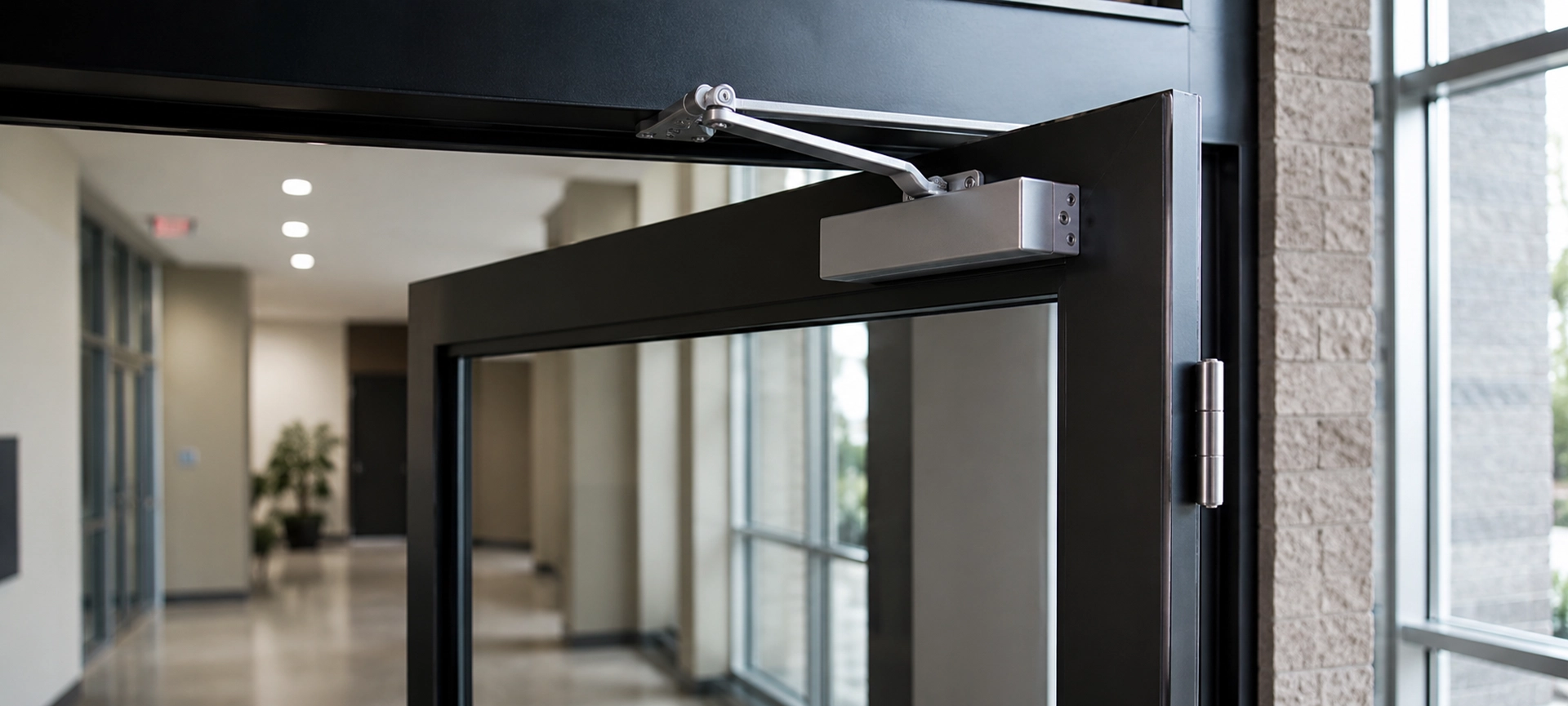
What a Commercial Door Closer Actually Does
A door closer controls the way a commercial door opens and returns to the frame. It helps the door close at a controlled speed, latch securely, and reduce strain on hinges, pivots, locks, frames, and glass. Most surface-mounted closers use a spring and hydraulic fluid. When someone opens the door, the spring stores force. As the door closes, internal oil moves through small passages. Adjustment valves control how quickly that oil flows. A closer may control:- Sweep speed for the main closing movement
- Latch speed for the final few inches
- Backcheck to slow a door before it hits the stop
Why Slamming Doors Cost More Than Noise
A slamming door is often treated as an annoyance, but it can create real costs inside a busy commercial property. Repeated impact can loosen fasteners, shift the frame, damage the strike plate, and shorten the life of locks and exit hardware. On glass storefront doors, vibration can affect the door rail, pivots, seals, and surrounding glazing. A small storefront door slamming fix can turn into a wider entrance repair if the issue is left too long. People risk matters too. A heavy door that closes too quickly can catch fingers, hit shoulders, or surprise someone carrying bags, tools, food trays, or mobility aids. Staff may prop it open, creating security, cooling, and pest issues.Why June Makes Door Closer Problems Easier to Notice
June is a common month for door closer complaints because storefronts face different pressure and traffic patterns. Air conditioning runs longer, outdoor heat rises, and summer wind can catch entrance doors with more force. A door that worked well in April may close differently once conditions change. Foot traffic, patio movement, deliveries, and staff use can make a weak closer show its age. Look for patterns such as:- The door slams harder on windy afternoons.
- The door closes too slowly when the air conditioning is running.
- The door no longer latches unless someone pulls it.
- The arm clicks, shifts, or feels loose.
- Clear or amber oil appears on the closer body or frame.
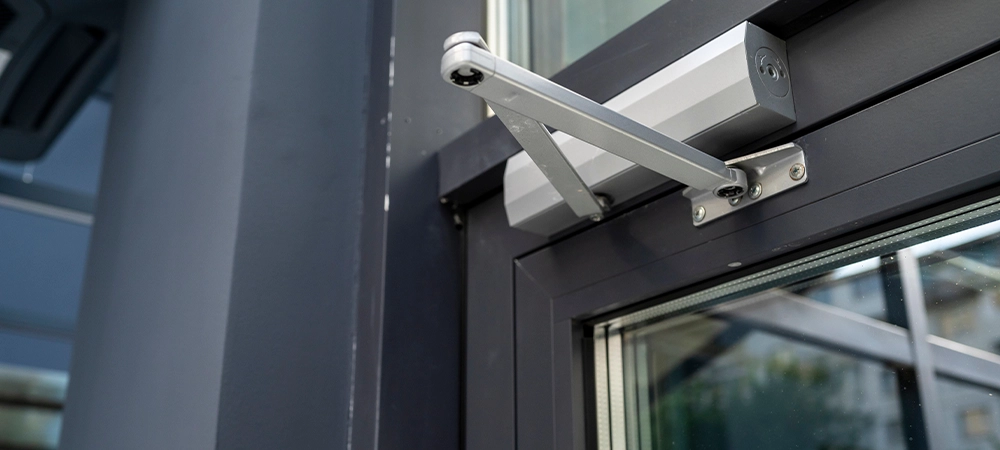
Signs the Closer Needs a Valve Adjustment
Some door closer problems can be corrected with a proper adjustment. This usually applies when the closer body is sound, the arm is secure, and there is no visible oil loss. A technician may adjust the sweep speed, latch speed, or backcheck in small turns. Small changes matter because over-adjusting the valves can damage the closer or make the door unsafe. Valve adjustment may be enough when:- The door closes evenly but slightly too fast
- The slam happens only at the final few inches
- The door almost latches but needs a little more force
- The door opens well and has smooth resistance
- No oil is visible around the cylinder, spindle, or cover
Signs the Closer Cylinder Is Failing
A failing closer cylinder is different from a closer that needs tuning. Once the internal hydraulic seal fails, the closer loses the controlled resistance that keeps the door moving safely. The clearest sign is leaking oil. Commercial door closers rely on sealed hydraulic fluid. If that oil escapes, the closer cannot control the spring properly. A closer may need replacement when:- Oil streaks appear on the closer body
- The door slams even after adjustment
- The door has no smooth resistance
- The arm pulls away from the shoe or frame
- The closer body is cracked, rusted, or bent
- The door opens too far and hits the wall or glass
- The closer was already undersized for the door
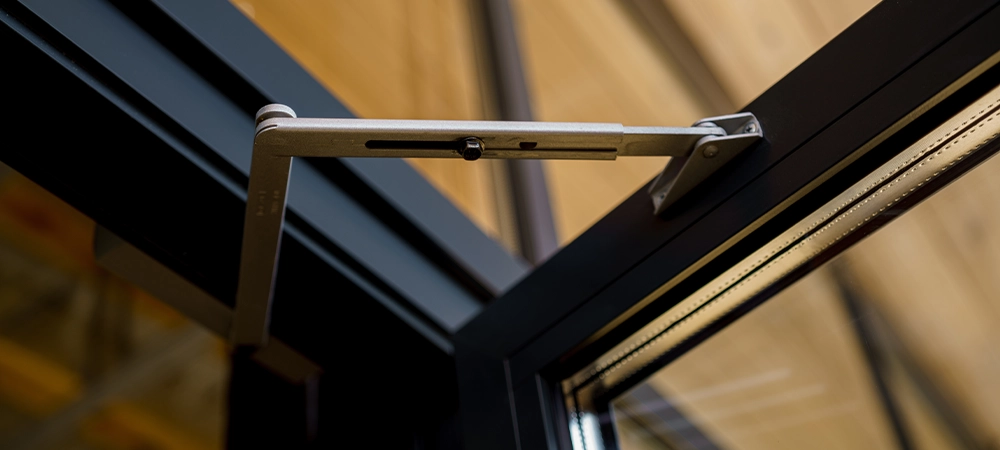
The Security and Energy Costs of a Weak Closer
A weak closer can leave the door unlatched after each customer, tenant, or staff member passes through. That affects after-hours security, alarm performance, and lock reliability. If the latch does not engage, the door may look closed while the building is still exposed. Energy loss is another hidden cost. A door that hangs open for even a few seconds longer on every use lets cooled indoor air escape and lets hot, humid air enter. In summer, that can make the air conditioning work harder near the front entrance. Commercial Door Pros also handles broader commercial windows and doors in Toronto when the closer issue is part of a larger entrance problem, such as worn pivots, loose frames, damaged seals, or storefront door misalignment. Related Article: Summer AC Bills Skyrocketing? How to Audit Your Toronto Storefront Door Seals for Energy LossWhy the Door Itself Should Be Checked Too
The closer is often blamed first, but the whole opening should be checked before parts are replaced. A good repair visit looks at the door, frame, hinges or pivots, threshold, weather stripping, lock, arm bracket, fasteners, and glass rail. If the door is sagging, rubbing, or out of square, a new closer may still fail early. If the frame is loose, the closer arm may pull against weak material. If the latch is misaligned, the closer may be forced to slam just to get the door closed.What to Do Before Calling For Repair
A property manager or business owner can do a quick visual check before booking service. Avoid taking the closer apart or forcing the valves, but make note of what the door is doing. Check these details:- Does the door slam during the full swing or only near the latch?
- Is there oil on the closer, arm, door, or frame?
- Does the door latch every time?
- Does the door rub the threshold or frame?
- Is the closer arm loose or angled strangely?
- Did the issue start after wind, impact, or hardware work?
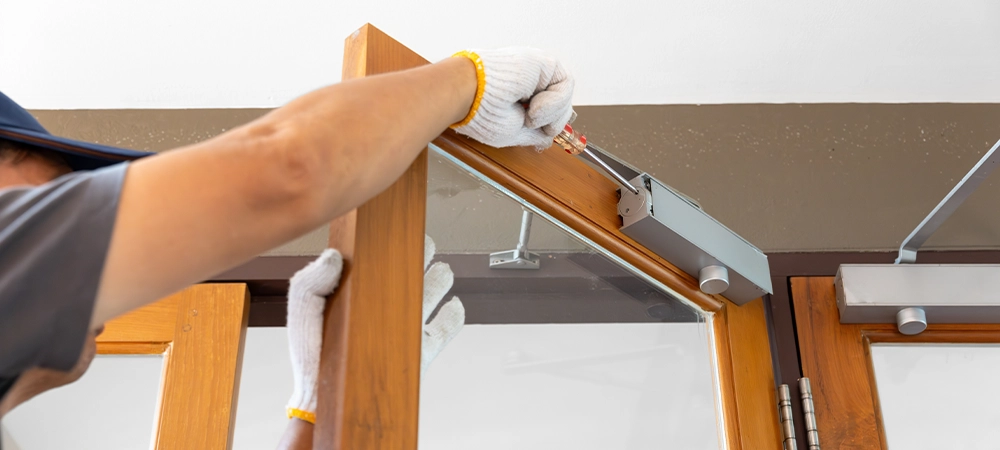
Stop the Slam Before It Spreads
A door closer is a small part with a large job. It protects people, glass, locks, frames, seals, heating and cooling, and daily building security. Once a commercial door starts slamming, leaking oil, or failing to latch, the cost of waiting often grows faster than the cost of the repair. Commercial Door Pros provides commercial door repair, maintenance, and emergency support across the Greater Toronto Area. If your storefront door is slamming, leaking oil, or fighting the wind, book a closer inspection before the damage spreads through the rest of the entrance.Frequently Asked Questions
Why is my storefront door suddenly slamming? A storefront door may slam because the closer valve shifted, the arm is loose, the door catches wind, or the hydraulic cylinder is failing. Oil leaks, fast closing, and poor latching should be checked before nearby hardware gets damaged further. Can a door closer be adjusted instead of replaced? Yes, adjustment may work when the closer is intact, oil-free, properly mounted, and still gives smooth resistance. Replacement is more likely when the cylinder leaks, the arm is damaged, the body is cracked, or the door still slams after tuning. Is leaking oil from a commercial door closer serious? Yes. Oil means the internal hydraulic seal has likely failed. Since the closer uses that fluid to control closing speed, leaking usually leads to slamming, weak resistance, and unsafe movement. Most leaking commercial closers need replacement, not adjustment in service. How often should commercial door closers be serviced? High-traffic commercial doors should be checked at least once a year, with extra checks after impact, seasonal wind changes, or repeated slamming. Busy storefronts, clinics, restaurants, and industrial doors may need planned maintenance to stay safe and working smoothly year-round. Do heavy summer winds affect storefront door closers? Yes. Strong winds can force the door open wider, fight the closer, or make the door slam on the return swing. A proper closer setup, correct backcheck, solid mounting, and door alignment help reduce wind-related damage during busy summer periods.A closer that fully closes the door is also a fire-code requirement, which we cover in our guide to Ontario Building Code fire door requirements.
A door closer is only one part of a working opening. For the full picture on how hinges, locks, exit devices, and closers work together, see our guide to commercial door hardware.
A closer is only part of the hardware picture. See our full guide to commercial door locks for how lock types, grades, and functions fit together.
If your closer just needs fine-tuning rather than a full repair, our step-by-step guide on how to adjust a commercial door closer walks through the sweep, latch and backcheck valves.


