Why Tailgating Is a Real Building Security Problem
Tailgating happens when an unauthorized person follows an approved person through a controlled entrance. It can happen in seconds, especially when a tenant holds the door open or a courier enters behind someone carrying bags. The issue is common in offices, plazas, medical buildings, mixed-use properties, apartments, and industrial units with shared lobbies. Even a good access card system loses value if the door closes slowly, fails to latch, or has weak hardware that can be forced open. Tailgating can create risks such as:- Unauthorized access to tenant spaces
- Theft from common areas, mailrooms, or storage rooms
- Safety concerns for staff and visitors
- Higher liability exposure after an incident
- Loss of confidence from tenants
Start With the Door Before Adding More Technology
Many commercial properties invest in cameras, keypads, fobs, and alarms while the physical door remains worn, loose, or easy to pry. Technology helps, but it should sit on a strong entrance system. A weak door edge, loose frame, sagging hinge, or failing latch point can reduce security even if the access control system works. The best approach is to inspect the whole opening before adding upgrades. A proper entrance review should check:- Door alignment and frame condition
- Hinge wear and fastener strength
- Lock, strike, and latch engagement
- Closer speed and latching force
- Glass, rails, pivots, and thresholds
- Access control wiring and strike operation
- Wear patterns caused by foot traffic
How Continuous Hinges Strengthen Busy Entrances
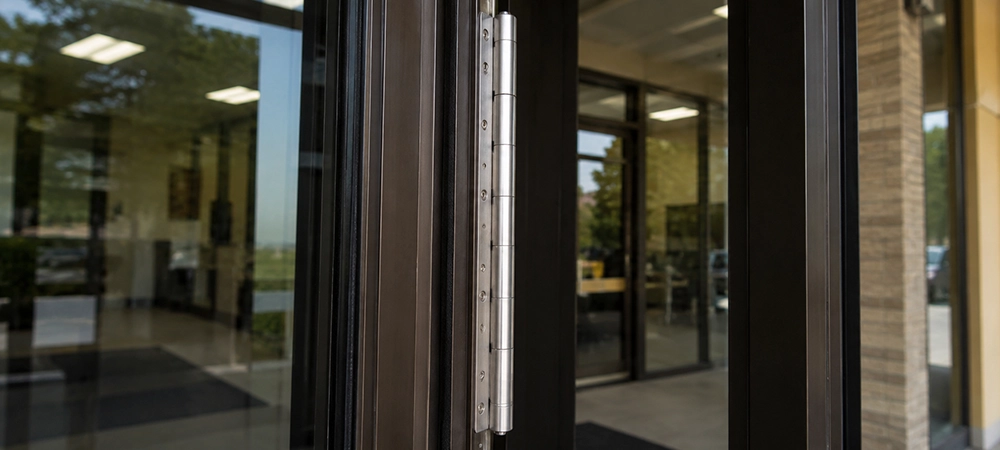
Continuous hinges, also called Roton hinges, run along most or all of the door height. They spread the door’s weight across a longer surface instead of concentrating stress at a few hinge points. That matters because entrance doors may open hundreds or thousands of times a day. Over time, standard hinges can loosen, sag, or pull away from the frame. A sagging door may rub, latch poorly, or leave a gap that makes prying easier. Continuous hinges can help by:- Reducing hinge-side gaps
- Improving door alignment
- Supporting heavy aluminum, steel, or glass doors
- Reducing stress on the frame
- Helping the latch meet the strike properly
- Improving long-term performance on high-traffic doors
Why Heavy-Duty Latch Guards Matter
A latch guard protects the space between the door and frame. This is the area someone may try to pry, manipulate, or force with a tool. In many shared entrances, the latch side takes constant abuse from pulling, bumping, and weather exposure. A heavy-duty latch guard helps cover the gap around the latch and strike. It can make forced entry harder and can protect hardware from repeated impact. Latch guards are often paired with:- Deadlatches
- Exit devices
- Storefront locksets
- Electric strikes
- Reinforced strike plates
- Security astragals on paired doors
Upgrading to High-Security Electric Strikes
Electric strikes allow access control systems to release the door electronically while keeping the latch protected. They are common in multi-tenant buildings because they work with fobs, card readers, intercoms, keypads, and remote release systems. A high-security electric strike should be selected for the door material, lock type, traffic level, and required holding strength. The strike also needs proper alignment. If the latch rubs or binds, tenants may struggle to enter, and staff may start propping the door open. High-security electric strike upgrades can support:- Better control over who enters
- Audit-friendly access management
- Faster tenant access changes
- Stronger latch holding
- Cleaner integration with card or fob systems
- Improved performance compared with worn mechanical strikes
How Foot Traffic Wears Down Commercial Entryways
Multi-tenant entrances age faster than many owners expect. Every opening cycle places force on hinges, closers, strikes, pulls, thresholds, and fasteners. Add deliveries, carts, cleaning crews, weather, and after-hours use, and the wear becomes easier to see. Heavy traffic can cause:- Loose hinge screws
- Misaligned latches
- Slow or slamming closers
- Worn thresholds
- Damaged weather stripping
- Pull handles that loosen from the door
- Strike plates that shift out of position
- Door edges that show pry marks or impact damage
Building a Practical Security Upgrade Plan
The best commercial property door security upgrades are practical, phased, and based on the way the building is used. A plaza with retail tenants needs different entrance planning than a medical building, warehouse, or apartment lobby. Start with the highest-risk entrances first. These may include main lobbies, rear staff doors, garage access, delivery entrances, stairwell doors, and shared corridors. A strong plan may include:- Continuous hinges on worn or heavy doors
- Heavy-duty latch guards on vulnerable latch edges
- High-security electric strikes for controlled entry
- Door closer adjustment or replacement
- Reinforced frames and strike areas
- Weather stripping repairs
- Tenant access control review
- Preventive maintenance visits
Signs Your Entryway Needs Security Attention
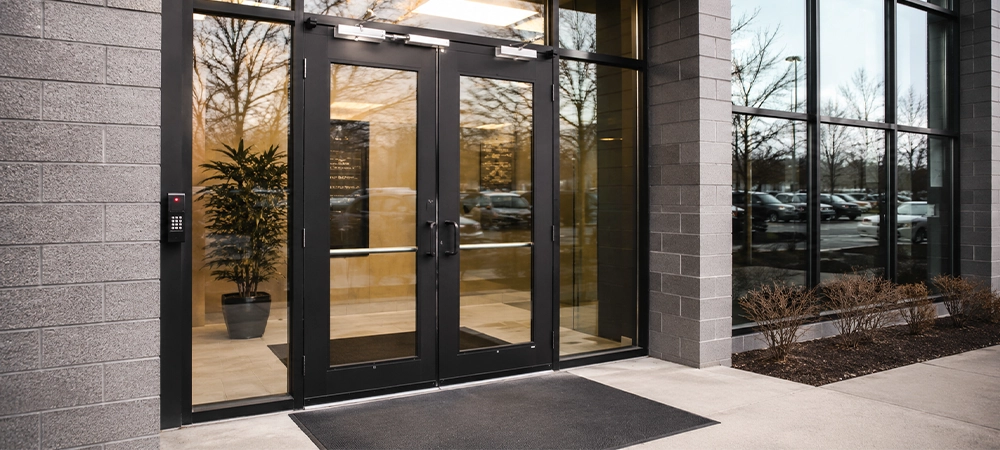
Property managers can schedule an entrance review before a break-in happens. Most door security problems leave warning signs first. Watch for tenants reporting that the door feels loose, sticks, slams, or fails to latch. Also check for frame gaps, visible pry marks, bent latch guards, loose handles, oil leaks from closers, and card reader complaints. A secure commercial entryway should close without help, latch on its own, resist casual prying, and handle regular traffic. If staff are using door stops, tape, or temporary fixes, the entrance needs professional attention.Keep the Door Working as Hard as the Access System
Tailgating prevention depends on people, hardware, access control, and maintenance. Signs and cameras can help, but the door must still close, latch, and resist forced entry. Commercial Door Pros helps GTA property managers repair, upgrade, and maintain commercial entrances for offices, plazas, apartments, retail buildings, and industrial properties. If your shared entrance is showing wear or your security audit found weak points, book a commercial door inspection and plan the right upgrades before small gaps become bigger risks.Frequently Asked Questions
What is tailgating in building security? Tailgating happens when an unauthorized person follows an approved person through a controlled entrance. It is common in multi-tenant buildings because people often hold doors for others, especially during busy hours, deliveries, tenant changeovers, and shared lobby traffic periods too. How do continuous hinges improve commercial door security? Continuous hinges spread door weight along the full hinge side, which helps reduce sagging, loose hinge points, and hinge-side gaps. Better alignment supports smoother latching and makes the door more resistant to wear from heavy daily traffic and repeated impact. Are latch guards worth adding to commercial entry doors? Yes. Heavy-duty latch guards protect the latch-side gap where prying often starts. They work best when matched to the door, lock, frame, and swing direction. A properly installed guard adds visible and physical protection without blocking normal door operation daily. Can electric strikes stop tailgating by themselves? No. Electric strikes control authorized release, but they do not manage every person walking through the opening. Tailgating prevention also needs reliable door closing, clear tenant policies, access control settings, cameras, and hardware that latches securely after each use consistently. When should a property manager book a commercial door security audit? Book an audit when doors fail to latch, show pry marks, sag, slam, or receive frequent tenant complaints. June is also useful for budget planning, summer traffic checks, and reviewing shared entrances before small hardware issues become security problems early.The lock you choose is central to entrance security. Our guide to commercial door locks explains the types, grades, and access-control options that keep a building secure.
A magnetic door lock tied to a card reader or keypad is one of the more common commercial access control upgrades for a GTA property.
Securing an exit without blocking egress comes down to the right hardware and trim. See our guide to panic bars and exit devices for outside trim options that keep a door locked from outside and free from inside.
Controlling who comes through a shared entrance often starts with an electric strike tied into access control.
Access-controlled powered entrances are a common security upgrade, so see our guide to commercial automatic doors for how door operators and card or fob readers work together at an entrance.
Hinges matter for security too. Our guide to commercial door hinges covers non-removable pins and security studs that keep an out-swinging door from being lifted off.