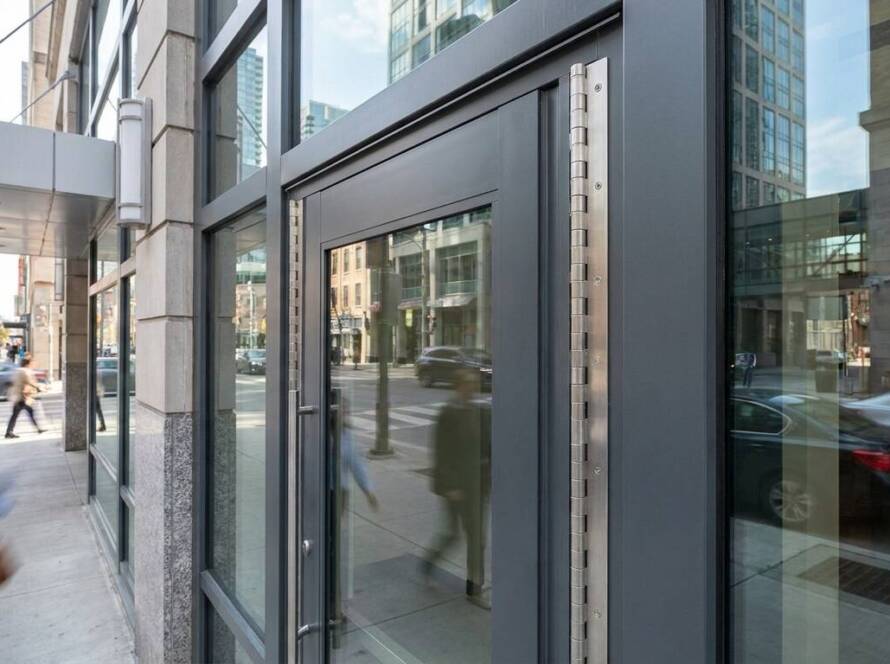
How Automatic Doors Function in Commercial Settings
Automatic doors operate through sensors, push plates, or integrated access systems that trigger a motorized opening mechanism. They are designed for controlled, consistent entry without requiring physical effort. In high-traffic environments, they serve a functional purpose beyond convenience. They regulate flow, reduce congestion, and create barrier-free access. A typical automatic system includes:- Motion or presence sensors
- Safety sensors that prevent contact during closing
- An operator motor with programmable timing
- Access control integration when required
- Backup battery systems in certain installations
Operational Advantages of Automatic Doors
Automatic doors are commonly selected where public access is frequent and accessibility compliance is required. Key advantages include:- Barrier-free entry for customers with mobility challenges
- Hands-free operation for deliveries or customers carrying items
- Reduced physical strain on door hardware
- Improved traffic flow during peak business hours
- Professional, modern appearance at main entrances

How Manual Doors Perform in Commercial Environments
Manual doors rely entirely on mechanical hardware. Hinges, closers, push bars, and locks control operation. There are no motors, control boards, or sensors involved. This simplicity is one of their strengths. Common manual door types include:- Steel doors
- Aluminum doors
- Hollow metal doors
- Wood doors
- Fire-rated doors
Performance Strengths of Manual Doors
Manual systems remain popular for practical reasons:- Lower installation cost
- No electrical dependency
- Straightforward repairs
- Strong structural durability
- Reliable performance in industrial settings

Cost Analysis: Installation Vs. Lifecycle Value
Many business owners focus on upfront pricing. However, a true comparison requires examining total lifecycle value.Automatic Doors: Financial Considerations
Automatic systems involve:- Higher initial installation costs
- Electrical wiring and setup
- Sensor calibration
- Scheduled preventive maintenance
Manual Doors: Financial Considerations
Manual systems typically involve:- Lower purchase and installation cost
- Fewer mechanical components
- Reduced ongoing servicing complexity
- Minimal electrical maintenance
Accessibility and Regulatory Compliance
Accessibility requirements in Ontario influence entrance design decisions. Businesses serving the public must provide accessible entry solutions. Automatic doors help by:- Eliminating the need for physical force
- Supporting wheelchair access
- Reducing liability risk related to heavy entry doors
- Meeting barrier-free design expectations
Energy Efficiency and Climate Control
Doors directly impact heating and cooling performance. Poorly sealed or frequently propped-open entrances increase energy loss. Automatic systems can improve control by:- Limiting open duration through programmable settings
- Integrating with vestibule systems
- Reducing unnecessary open cycles

Security and Safety Factors
Security must align with your building’s risk level. Automatic doors can integrate with:- Access control systems
- Timed locking schedules
- Keycard entry
- Electronic strike systems
- Reinforced frames
- High-grade mechanical locks
- Panic bars and exit devices
- Fire-rated assemblies

Maintenance and Service Expectations
All commercial doors require routine inspection. Neglected systems lead to downtime and safety issues. Automatic doors require:- Sensor calibration
- Motor inspection
- Electrical diagnostics
- Safety system testing
- Hinge lubrication
- Closer adjustment
- Lock and latch inspection
- Seal replacement
Which Door Type Aligns With Your Business Model?
There is no universal answer. The correct choice depends on operational demands. Choose automatic doors if your business:- Experiences high daily foot traffic
- Serves the public directly
- Requires barrier-free access
- Prioritizes customer convenience
- Has controlled or low traffic
- Requires heavy-duty industrial durability
- Operates in back-of-house areas
- Focuses on minimizing capital cost


Invest in Function, Not Just Features
The right door system supports daily efficiency, protects your property, and aligns with compliance standards. Automation offers convenience and accessibility. Manual systems offer durability and cost control. The better investment is the one that matches your building’s traffic, security needs, and budget realities. If you are planning a new installation or evaluating an upgrade, Commercial Door Pros provides professional assessments, code-compliant installations, and ongoing maintenance across the Greater Toronto Area. A properly selected door system does more than open and close. It protects your operations every single day. Contact us now for inquiries.Frequently Asked Questions
Are automatic doors more expensive to maintain than manual doors? Yes. Automatic systems include motors and sensors that require scheduled servicing. Manual doors typically involve simpler mechanical repairs. Do all retail stores need automatic doors? Many public-facing businesses require accessible entry solutions. Automatic doors often simplify compliance and improve customer flow. Can a manual door be upgraded to automatic? In many cases, a compatible manual door can be fitted with a power operator. A professional inspection determines suitability. Which door type lasts longer? Longevity depends on traffic volume, installation quality, and maintenance. Heavy-duty manual steel doors often perform well in industrial settings. Is a mix of automatic and manual doors common? Yes. Many buildings use automatic doors at main entrances and manual systems for interior or secondary access points.Powered operators matter just as much on larger openings. For how manual and automatic options compare on bigger doors, see our overview of commercial overhead doors.
If you decide a powered entrance is the right call for your building, our full guide to commercial automatic doors walks through the sliding, swing and folding types, the operators and sensors, and the Ontario accessibility rules in detail.
If you decide to automate, our guide to commercial automatic door operators explains the operator types, activation methods, and what shapes the cost.